How to Sell Gold: A Complete Guide for Beginners
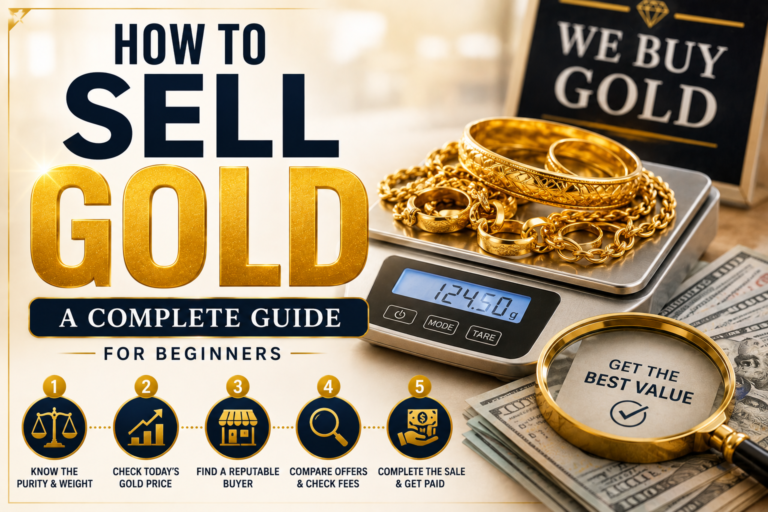
Selling gold can be intimidating — especially if you have never done it before. Whether you are selling a single broken chain, a box of inherited jewelry, or gold coins you have collected over the years, the process is the same: know what you have, know what it is worth, and know who will pay you the most for it. This guide walks you through every step of selling gold — from identifying what you have and calculating its melt value, to choosing the right type of buyer, comparing offers, negotiating effectively, and avoiding the most common scams that cost sellers thousands of dollars every day. By the end, you will know exactly how to sell your gold with confidence and get the best possible price.Selling Gold: The 5-Step Process • Step 1: Identify what you have — separate by karat, weigh each pile accurately • Step 2: Calculate the melt value — the absolute minimum your gold is worth • Step 3: Decide what to sell as jewelry vs. scrap — intact pieces may be worth more than melt • Step 4: Get multiple quotes — at least 3, preferably from different types of buyers • Step 5: Negotiate and close — never accept the first offer; use your melt value knowledge as leverage
Step 1: Identify What You Have
Before you can sell your gold, you need to know exactly what you are selling. Gold buyers pay based on weight and purity — and different purities command different prices. Mixing 14K and 18K gold together in one pile means you will be paid at the lower 14K rate for everything.Sort Your Gold by Purity
- Check every piece for a hallmark: Look for stamps like 24K, 22K, 18K, 14K, 10K, 999, 916, 750, 585, 417. Use our gold purity checker to decode any stamp instantly.
- Create separate piles for each karat: All 24K together, all 22K together, all 18K together, and so on. Do not mix purities.
- Separate gold-plated and gold-filled items: Look for GP, GEP, GF, RGP, or HGP stamps. These have negligible gold value and most gold buyers will not accept them. Do not include them with your solid gold.
- For unmarked items: If a piece has no visible hallmark, set it aside. You will need professional testing (acid test or XRF) to determine its purity. If you cannot test it, assume the lowest reasonable karat (10K or 14K) for valuation purposes.
- Remove non-gold components: Take out gemstones, remove non-gold clasps and findings, discard packaging. Gold buyers pay for gold — anything else in the pile works against you.
Weigh Each Pile Separately
Use a digital jewelry scale with 0.01g precision (available for $10-30 online). Weigh each karat pile separately and record the weights. A kitchen scale is not accurate enough — at current gold prices, a 1-gram error can mean a $60-75 mistake. Weigh in grams, not ounces. If your scale only shows ounces, make sure it is set to grams (g), not regular ounces (oz). For gold, always use grams or troy ounces — never regular (avoirdupois) ounces.Step 2: Calculate Your Gold’s Melt Value
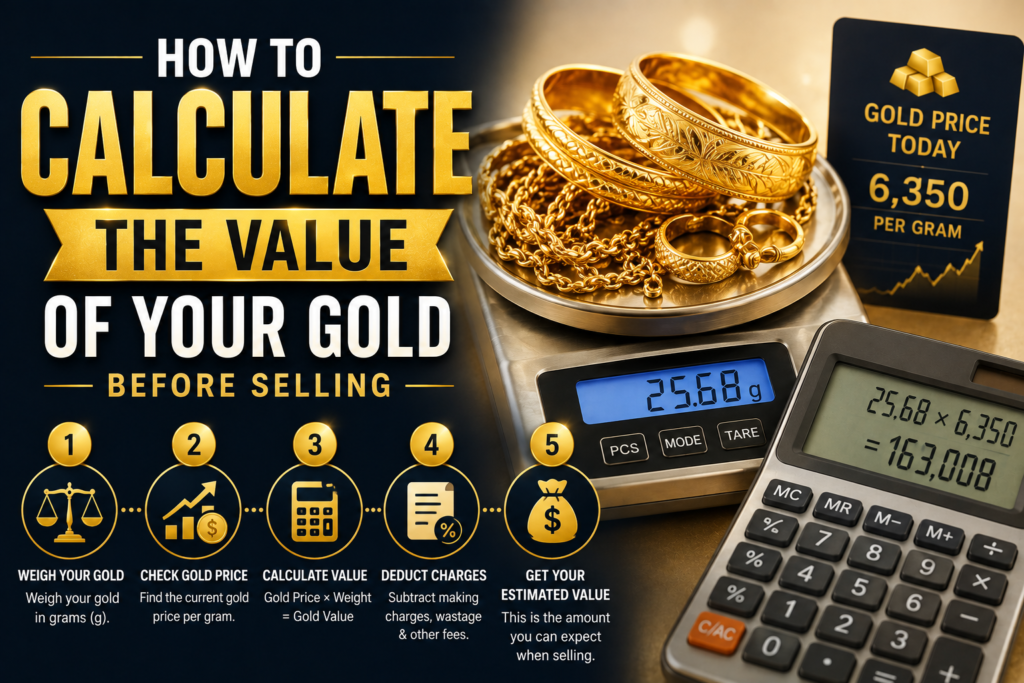
The melt value is the raw value of the pure gold content in your items at the current spot price. This is the absolute minimum your gold is worth — the number you walk away if any buyer offers below it. Knowing your melt value before you talk to any buyer is the single most powerful negotiation tool you have.How to Calculate Melt Value
Melt Value = Weight (in grams) × Purity Factor × Current Spot Price per Gram| Karat | Purity Factor | Melt Value for 10g at $75/g Spot* |
|---|---|---|
| 24K | 0.999 | $749.25 |
| 22K | 0.916 | $687.00 |
| 18K | 0.750 | $562.50 |
| 14K | 0.583 | $437.25 |
| 10K | 0.417 | $312.75 |
*Hypothetical gold spot price of $2,333/oz (~$75/g). Use our gold value calculator for exact melt values at today’s live price.
For a step-by-step valuation guide including workmanship and brand premiums, read our complete gold jewelry value guide.Calculate Your Gold’s Exact Melt Value
Use our free calculators to get the precise melt value and estimated resale price for your gold at today’s live spot price.
Gold Value Calculator → Scrap Gold Calculator →Step 3: Scrap vs. Intact Jewelry — What to Sell as What
Not all gold should be sold as scrap. Intact, wearable jewelry with brand value, gemstones, or design appeal is often worth significantly more than its melt value. Selling everything as scrap is one of the most common and costly mistakes gold sellers make.Sell as Scrap (Melt Value) If:
- The item is broken, damaged, or unwearable
- The item is a single earring, a bent ring, or a kinked chain
- The item is outdated, unfashionable, or has no brand recognition
- You have gold fillings, dental gold, or industrial gold scrap
- You need cash quickly and want the simplest transaction
Sell as Jewelry (Above Melt Value) If:
- The item is from a recognized brand: Tiffany & Co., Cartier, Bvlgari, Van Cleef & Arpels, etc.
- The item has significant gemstone value: high-quality diamonds, rubies, sapphires, emeralds
- The item is a complete, wearable piece in good condition
- The item is vintage or antique (20+ years old) with distinctive design
- The item has high craftsmanship: hand-engraving, filigree, intricate stone settings
Sell Gemstones Separately If:
- The stone is a certified diamond of 0.5 carat or larger
- The stone is a high-quality colored gemstone (ruby, sapphire, emerald)
- You have a gemological certificate (GIA, AGS, etc.) for the stone
- The stone’s value significantly exceeds the gold value
Step 4: Where to Sell Gold — Comparing Your Options
Different buyers offer dramatically different prices for the same gold. Understanding who pays what — and why — is essential for maximizing your return.| Buyer Type | Typical Payout | Speed | Best For |
|---|---|---|---|
| Online Refiners | 90-95% of melt | 1-2 weeks | Large quantities of scrap; highest payout |
| Local Gold Buyers | 75-85% of melt | Immediate | Small to medium amounts; instant cash |
| Pawn Shops | 60-75% of melt | Immediate | Very small amounts; urgent cash (lowest payout) |
| Jewelry Stores | 70-80% of melt | Same day | Intact, wearable pieces; trade-in options |
| Private Sale (eBay, etc.) | 80-120% of melt | Days to weeks | Branded, designer, or high-quality pieces |
| Luxury Consignment | 60-85% of sale price | Weeks to months | Luxury branded jewelry (Cartier, Tiffany, etc.) |
Step 5: Get Multiple Quotes and Negotiate
This is the most important step in selling gold. Never accept the first offer. Gold buying is a competitive business, and offers can vary by 20% or more for the exact same items. Getting multiple quotes and being willing to walk away are your strongest negotiation tools.How to Get the Best Price
- Get at least 3 quotes from different types of buyers. Visit a local gold buyer, a pawn shop, and a jewelry store. Also check online refiner buy prices for comparison.
- Know your melt value before you walk in. Write it down. When a buyer offers you 70% of melt, you will recognize it immediately and can negotiate or walk away.
- Never sell under pressure. If a buyer says “this offer is only good right now,” walk away. Legitimate gold buyers do not use high-pressure tactics.
- Negotiate respectfully. Say: “I have calculated the melt value at $X. Can you do better than 80% of melt?” Buyers expect negotiation and build margin into their first offer.
- Be willing to walk away. The best negotiation tool is your feet. If you do not like an offer, thank them and leave. There are always other buyers.
- Check online refiner prices. Major online gold buyers publish their daily buy prices. These provide a baseline for what you should expect locally.
Common Gold Selling Scams and How to Avoid Them
1. The “Gram Weight” Scam
What happens: The buyer weighs your gold using pennyweight (dwt) but tells you the number is in grams — effectively paying you less than half what your gold is worth. Or they use a scale set to regular ounces instead of troy ounces, undervaluing your gold by 9.7%. How to avoid: Weigh your gold yourself before visiting any buyer. Know the exact gram weight of each pile. Watch the buyer’s scale when they weigh your gold. If the numbers do not match yours, ask questions or leave.2. The “Mixed Karat” Scam
What happens: The buyer mixes all your gold together — 18K, 14K, 10K — and pays you at the lowest karat rate for everything. How to avoid: Keep your gold separated by karat. Insist each purity is weighed and priced separately. If the buyer wants to mix everything, they should use an XRF analyzer to determine the exact composition and pay accordingly — not default to the lowest karat.3. The “Melt Loss” Scam
What happens: The buyer claims they need to deduct 15-25% for “melt loss” or “refining loss” — far more than the actual 1-3% loss during refining. How to avoid: Actual melt loss during professional refining is 1-3%, not 15-25%. If a buyer claims excessive melt loss deductions, they are taking advantage of you. Walk away and find another buyer.4. The “Stone Removal Fee” Scam
What happens: The buyer offers to remove gemstones for you, then charges an excessive fee that eats into your payout. Or they claim the stones have no value and keep them. How to avoid: Remove gemstones yourself before bringing gold to sell. If stones have value, have them professionally appraised and sell them separately. Never let a gold buyer “take care of” your gemstones.5. The “Distracted Scale” Scam
What happens: While you are distracted — with conversation, paperwork, or a “free cleaning” — the buyer switches scales, adjusts the calibration, or manipulates the weight reading. How to avoid: Watch the scale during the entire weighing process. Know your gold’s weight before you arrive. Stay focused on the transaction; do not let anyone divert your attention while your gold is being weighed or tested.Frequently Asked Questions About Selling Gold
How do I know if I am getting a fair price for my gold?
A fair price from a gold buyer is typically 75-85% of melt value for small to medium amounts and 90-95% of melt from online refiners for larger quantities. If you know your melt value (use our gold value calculator), you can instantly evaluate any offer. Offers below 70% of melt are lowball offers — walk away. Offers above 95% of melt are rare and usually only for large quantities sold directly to refiners.Should I clean my gold before selling it?
A basic cleaning (warm water and mild soap) will not hurt and may make your gold look more presentable if you are selling intact jewelry. However, do not invest in professional cleaning before selling for scrap — the buyer will not pay more for clean scrap gold. The gold will be melted down regardless of its appearance. For intact jewelry being sold as jewelry, gentle cleaning to improve presentation can be worthwhile.Do I need an appraisal before selling gold?
Not for scrap gold. A formal jewelry appraisal costs $50-150 and describes retail replacement value for insurance purposes — which is 100-200% above what you will actually receive when selling. For scrap gold, calculating the melt value yourself is sufficient. For high-value branded jewelry or pieces with significant gemstones, a professional appraisal can help you negotiate with buyers who may offer above melt value for desirable pieces.What documents do I need to sell gold?
In most countries, you will need government-issued photo identification (driver’s license, passport). Gold buyers are legally required to record seller information to prevent stolen goods from being sold. Some jurisdictions also require a thumbprint for certain transaction amounts. You do not need proof of purchase or original receipts — though having them can help establish provenance for branded or antique pieces. Be suspicious of any buyer who does not ask for identification — they may be operating illegally.Is it better to sell gold now or wait for prices to go up?
This is a personal decision based on your financial needs and market outlook. Gold prices are difficult to predict in the short term. If you need the cash now, sell now — timing the market is stressful and often unsuccessful. If you can wait and believe gold prices will rise (due to inflation concerns, geopolitical uncertainty, or expected interest rate cuts), holding may be worthwhile. Many sellers use a partial sale strategy: sell some now for immediate needs and hold the rest for potential future gains. Check current trends on our live gold price page.Can I sell broken or damaged gold jewelry?
Yes. Broken gold is sold as scrap and valued purely on its gold content — the condition does not matter because the gold will be melted down. A broken 18K chain is worth exactly the same per gram as an intact 18K chain when sold for scrap. However, if the broken piece is from a luxury brand (Tiffany, Cartier) and could be repaired, you may get more by selling it as a repairable branded piece rather than as scrap.How are gold coins different when selling?
Gold bullion coins (American Eagles, Krugerrands, Maple Leafs, Britannias) typically sell for 95-100% of spot price — much closer to melt value than jewelry. This is because their purity and weight are guaranteed by sovereign governments, eliminating testing costs. Sell gold coins to coin dealers, bullion dealers, or online precious metals platforms for the best prices. Use our gold coin value calculator to value specific coins including their mint premiums.
About the author