How to Clean and Care for Gold Jewelry Properly
Gold jewelry can last for generations — but only if it is cleaned, stored, and maintained correctly. While pure gold (24K) never tarnishes or corrodes, most gold jewelry is alloyed with other metals that can react with chemicals, moisture, and everyday wear. Proper care preserves both the beauty and the value of your gold jewelry, whether it is a daily-wear engagement ring or a treasured family heirloom. This guide covers safe cleaning methods for every type of gold jewelry, proper storage techniques, what to avoid, how to care for different gold colors (yellow, white, rose), and when to seek professional cleaning. Follow these practices and your gold jewelry will remain beautiful for decades.Gold Jewelry Care: Quick Rules
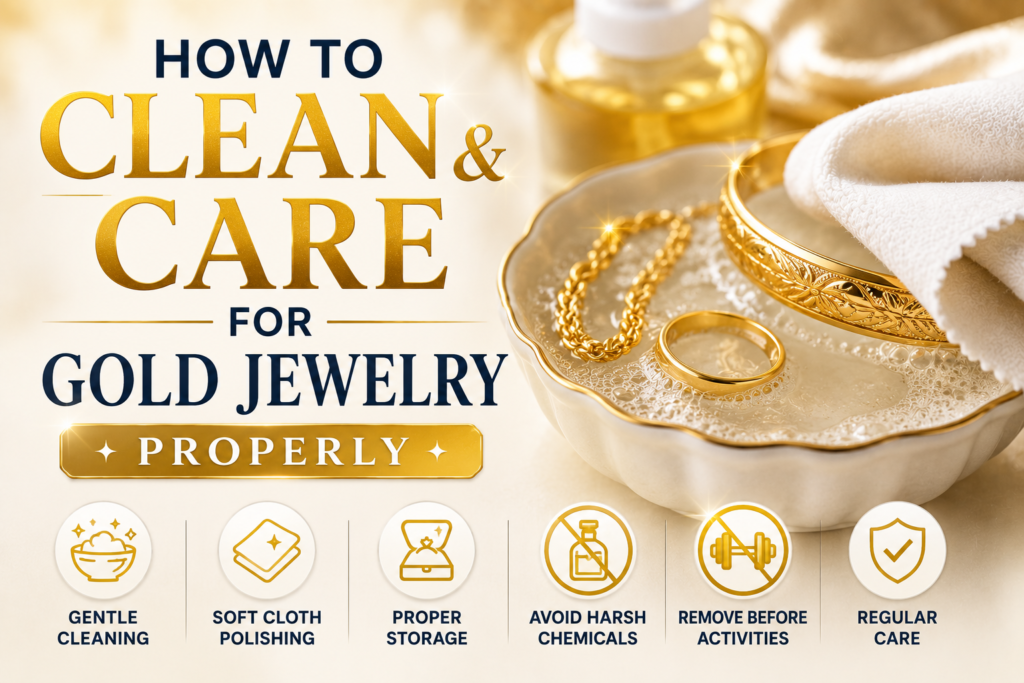
• Clean gently: Warm water, mild dish soap, soft brush — no harsh chemicals or abrasives
• Store separately: Each piece in its own soft pouch or compartment to prevent scratches
• Remove before: Swimming (chlorine), exercising (sweat), cleaning (chemicals), showering (soap buildup)
• White gold: Needs rhodium re-plating every 1-3 years
• Gemstone pieces: Avoid ultrasonic cleaners — they can loosen settings
• Professional check: Have rings inspected annually for loose prongs and worn settings
Daily Care: What to Do and What to Avoid
The most important gold jewelry care happens not during cleaning, but during daily wear. Knowing when to remove your gold jewelry prevents most damage before it occurs.Always Remove Gold Jewelry Before:
- Swimming: Chlorine in pools and hot tubs is highly corrosive to gold alloys, particularly at high temperatures. It can cause pitting, weakening, and discoloration. One swim in a chlorinated pool can permanently damage gold jewelry.
- Exercising: Sweat contains salts and acids that can dull gold’s finish over time. Friction from weights, gym equipment, and repetitive movements causes accelerated wear on rings and bracelets.
- Cleaning: Household cleaners contain bleach, ammonia, and other harsh chemicals that can damage gold alloys and dissolve the rhodium plating on white gold.
- Showering: Soap, shampoo, and conditioner leave a film on gold that dulls its shine. Over time, this buildup requires professional cleaning to remove completely.
- Applying lotions, perfumes, and cosmetics: These products contain oils, alcohols, and chemicals that build up on gold surfaces and trap dirt. Apply these products before putting on jewelry, and let them dry completely.
- Gardening or manual work: Dirt is abrasive and scratches gold. Impact from tools can bend rings and loosen stone settings.
- Sleeping: Chains can kink or break. Earring posts can bend. Rings can catch on bedding and loosen prongs.
Daily Habits for Gold Care:
- Put jewelry on last: After makeup, perfume, hairspray, and lotion have dried completely
- Take jewelry off first: Before undressing, showering, or any activity that could damage it
- Wipe after wearing: A quick wipe with a soft, dry microfiber cloth removes oils and sweat before they build up
- Inspect regularly: Check clasps, prongs, and links for signs of wear. Catch problems early before a stone is lost or a chain breaks
How to Clean Gold Jewelry at Home
Method 1: Soap and Water (Safest — Use This Most Often)
This is the gentlest and safest cleaning method, suitable for all gold jewelry including pieces with gemstones. Use this method for regular maintenance cleaning every few weeks for frequently worn pieces.- Prepare the solution: Mix a few drops of mild dish soap (not detergent) with warm — not hot — water in a small bowl. Avoid soaps with moisturizers, antibacterials, or harsh degreasers.
- Soak the jewelry: Place your gold jewelry in the solution and let it soak for 15-20 minutes. This loosens oils, dirt, and residue.
- Gently brush: Use a soft-bristled brush — a baby toothbrush or a dedicated jewelry brush — to gently clean the piece. Pay special attention to crevices, under stones, and around clasps where dirt accumulates. Use very light pressure.
- Rinse thoroughly: Rinse under warm running water. Always close the sink drain or use a strainer — a dropped earring or ring can disappear down the drain in an instant.
- Dry completely: Pat dry with a soft, lint-free microfiber cloth. Do not use paper towels (they can scratch gold). Let the piece air dry completely before storing.
Method 2: Ammonia Solution (For Heavily Soiled Yellow Gold Only)
For yellow gold that has significant buildup and needs a deeper clean, a diluted ammonia solution can be effective. Warning: Never use ammonia on white gold, rose gold, or gold with gemstones. Ammonia can damage rhodium plating and certain gemstones.- Mix one part clear household ammonia with six parts warm water. Never use undiluted ammonia.
- Soak the yellow gold jewelry for no more than one minute. Longer exposure can damage the alloy.
- Remove and gently brush with a soft brush.
- Rinse immediately and thoroughly under warm running water.
- Dry completely with a soft microfiber cloth.
⚠️ Never Clean Gold Jewelry With:
• Toothpaste: Contains abrasives that permanently scratch gold surfaces
• Baking soda: Abrasive — leaves micro-scratches that dull the finish
• Bleach: Oxidizes and weakens gold alloys; can cause structural failure
• Vinegar: Too acidic; can damage gold alloys and certain gemstones
• Boiling water: Thermal shock can crack gemstones and loosen settings
• Ultrasonic cleaners (for gemstone pieces): Vibrations can loosen prongs and crack included gemstones
• Paper towels or tissues: Wood fibers can scratch gold; use only microfiber or soft cotton
Cleaning Different Gold Colors
Cleaning Yellow Gold
Yellow gold is the easiest to clean and maintain. Its color is consistent throughout the metal, so scratches do not reveal a different color underneath. Use the soap and water method for routine cleaning. For deeper cleaning, the ammonia method is safe for yellow gold (without gemstones). Yellow gold can be professionally polished to remove surface scratches — the same color is present throughout the piece.Cleaning White Gold
White gold requires extra care because of its rhodium plating. The bright white finish is only on the surface — aggressive cleaning or polishing can wear through the plating faster.- Use only the soap and water method — never ammonia or abrasives
- Do not use polishing cloths on white gold; they can wear through the rhodium layer
- White gold that has turned yellowish needs re-plating, not cleaning. Take it to a jeweler for rhodium re-plating (typically $30-80 per piece, needed every 1-3 years)
- Between re-plating, gentle soap and water cleaning maintains the brightness
Cleaning Rose Gold
Rose gold is durable and relatively low-maintenance. Its color comes from copper in the alloy and is consistent throughout — like yellow gold, scratches do not reveal a different color.- The soap and water method is all you need for routine cleaning
- Rose gold develops a natural patina over time as the copper darkens slightly. Many people find this aging beautiful — it adds warmth and vintage character
- If you prefer the original brighter pink color, professional polishing can restore it (this removes a microscopic layer of metal, so do it sparingly)
- Avoid ammonia and harsh chemicals, which can react with the copper in the alloy
How to Store Gold Jewelry Properly
Proper storage prevents scratches, tangles, and tarnish. Gold is soft enough that gold-on-gold contact causes scratches. Different pieces rubbing against each other in a jewelry box will dull their finish over time.Storage Best Practices
- Store each piece separately: Use individual soft cloth pouches, jewelry boxes with divided compartments, or zip-top plastic bags (squeeze out excess air). Each piece should have its own space.
- Use anti-tarnish strips: While pure gold does not tarnish, the alloy metals (copper, silver) in lower-karat gold can. Anti-tarnish strips in your jewelry box absorb sulfur compounds that cause tarnishing.
- Keep chains fastened: Fasten the clasp and lay chains flat or hang them to prevent kinking and knotting. A knotted chain is at risk of breaking when untangled.
- Store in a cool, dry place: Humidity accelerates tarnishing of alloy metals. Avoid storing gold in bathrooms where steam and humidity are high.
- Avoid direct sunlight: Prolonged UV exposure can fade certain gemstones and potentially affect gold alloys over very long periods.
- Separate by metal type: Do not store gold with silver jewelry — silver is harder and will scratch gold. Platinum and gold can be stored together safely.
- Travel carefully: Use a dedicated travel jewelry case with individual compartments. Never toss gold jewelry loose into a bag or pocket.
Special Care for Gold Jewelry with Gemstones
Gold jewelry with diamonds, colored gemstones, or pearls requires extra caution. The gemstones are often more vulnerable than the gold setting itself.- Avoid ultrasonic cleaners: The high-frequency vibrations can loosen prongs, crack included gemstones (especially emeralds, which are naturally fractured), and dislodge pavé settings. Only use ultrasonic cleaners on solid metal pieces without stones.
- Avoid steam cleaners: Thermal shock from rapid temperature change can crack certain gemstones, particularly opals, emeralds, and tanzanite.
- Pearls are extremely delicate: Never soak pearl jewelry. Wipe pearls gently with a slightly damp soft cloth after each wear. Have pearl necklaces professionally restrung every 1-2 years if worn regularly.
- Opals contain water: They can crack if exposed to heat, harsh chemicals, or very dry environments. Clean only with a damp soft cloth.
- Emeralds are often oiled: Most emeralds are treated with oil to enhance clarity. Soaking or ultrasonic cleaning can remove this oil, making inclusions more visible.
- Annual professional inspection: Have rings with gemstone settings inspected by a jeweler once a year. They will check for loose prongs, worn settings, and stone security — catching problems before a stone is lost.
When to Get Professional Cleaning
While routine at-home cleaning maintains your gold jewelry, professional cleaning provides a deeper clean and addresses issues you cannot handle at home.Seek Professional Cleaning When:
- White gold needs re-plating: The yellowish tinge of worn rhodium plating requires professional re-plating — this cannot be cleaned away at home
- Heavy tarnish or buildup: Years of accumulated dirt, oils, and tarnish may require professional ultrasonic or steam cleaning
- Deep scratches or dents: Professional polishing can remove or minimize surface damage (note: this removes a microscopic layer of gold)
- Before selling or appraising: Professionally cleaned jewelry presents better and may command higher offers
- Loose stones or damaged settings: A jeweler can tighten prongs, repair clasps, and secure stones while cleaning
- Antique or heirloom pieces: Older jewelry may have weakened settings or hidden damage. Professional assessment prevents accidental damage during cleaning
Frequently Asked Questions About Gold Jewelry Care
How often should I clean my gold jewelry?
For daily-wear pieces (engagement rings, wedding bands, everyday chains), clean every 2-4 weeks using the gentle soap and water method. For occasional-wear pieces (dress jewelry, special occasion pieces), clean before and after each use or every few months. Professional cleaning is recommended once per year for frequently worn pieces, especially those with gemstone settings.Can I wear my gold jewelry in the shower?
It is not recommended. While water alone will not damage gold, soap, shampoo, and conditioner leave a film on gold that builds up over time and dulls the shine. This film is difficult to remove without professional cleaning. Additionally, wet gold is slippery — rings can slide off soapy fingers and disappear down the drain. It is safer to remove gold jewelry before showering.Does gold jewelry tarnish over time?
Pure gold (24K) never tarnishes. Lower-karat gold (14K, 10K) can develop a slight patina over many years because the alloy metals (copper, silver) react with air, moisture, and sulfur compounds. This tarnishing is very slow and usually presents as a slight darkening rather than the black tarnish associated with silver. Tarnish on gold can be easily polished away. White gold does not tarnish but loses its rhodium plating over time, revealing the yellowish metal underneath.Why did my white gold ring turn yellow?
White gold is plated with rhodium to give it a bright white finish. The underlying gold alloy is actually a pale grey-yellow color. Over time — typically 1-3 years of daily wear — the rhodium plating wears through, revealing the natural color of the gold alloy underneath. This is normal and not a defect. The solution is rhodium re-plating at a jeweler, which costs $30-80 and restores the bright white finish.Can I use a polishing cloth on my gold jewelry?
Yes, but use only cloths specifically designed for gold jewelry. These are impregnated with gentle polishing compounds that remove light tarnish and restore shine without scratching. Do not use silver polishing cloths on gold — they contain different chemicals. Do not use polishing cloths on white gold (they wear through the rhodium plating). For plated jewelry (gold-plated, not solid gold), avoid polishing entirely — it can remove the thin gold layer.How do I untangle a knotted gold chain?
Lay the chain on a flat, smooth surface under good lighting. Sprinkle a tiny amount of baby powder or cornstarch on the knot — this acts as a dry lubricant. Use two straight pins or sewing needles to gently work the knot apart, starting from the loosest part and working inward. Be patient — forcing the knot will break the chain. If the knot is very tight, take it to a jeweler who can untangle it professionally without damage. To prevent knots, always fasten chains before storing.Is it safe to clean gold jewelry with gemstones at home?
The soap and water method is safe for most gemstones, including diamonds, sapphires, and rubies. However, avoid soaking jewelry with porous or delicate stones: pearls, opals, emeralds, turquoise, lapis lazuli, and amber should not be soaked. For these, wipe gently with a barely damp soft cloth. Never use ultrasonic cleaners or ammonia solutions on jewelry with any gemstones. When in doubt about a specific stone, consult a jeweler.
About the author