Gold Jewelry Guide: How to Choose the Right Gold
Choosing the right gold jewelry involves more than picking a design you like. Gold purity, karat, color, durability, and price all play critical roles in determining whether a piece of gold jewelry is right for you. A 24K gold ring may look stunning but could bend within weeks of daily wear. A 10K gold chain may be affordable but contains less than half pure gold. Understanding these trade-offs is essential for making an informed purchase. This comprehensive gold jewelry guide walks you through every factor you need to consider before buying gold jewelry — whether you are shopping for an engagement ring, a wedding necklace, a traditional bangle, or a simple everyday chain. We cover purity, karat, color options, durability considerations, pricing factors, and how to verify authenticity so you can buy with confidence.Gold Jewelry: Quick Decision Guide
• For investment value: Choose 24K or 22K gold — highest gold content, best resale value
• For daily wear (rings, bracelets): Choose 14K or 18K — durable enough for everyday use
• For traditional Asian jewelry: Choose 22K — the cultural standard in India, Pakistan, and the Middle East
• For luxury branded pieces: Choose 18K — the standard for Cartier, Tiffany, and Bvlgari
• For white or rose gold looks: Choose 14K or 18K — lower karats hold color better
• On a budget: Choose 10K or 14K — genuine gold at the most accessible price point
How Gold Purity Affects Your Jewelry Choice
Gold purity is the single most important factor in choosing gold jewelry. It determines the gold’s color, durability, value, and suitability for different types of jewelry. Pure gold (24K) is 99.9% gold — too soft for most jewelry applications. Lower karat gold is alloyed with metals like silver, copper, zinc, and palladium to improve hardness and create different colors. Understanding gold purity is essential whether you are buying, selling, or valuing gold jewelry. For a complete technical guide, read our Gold Purity Explained article. Here, we focus on how purity affects your jewelry choices in practical terms.Which Karat Is Best for Your Jewelry?
Each karat level represents a different balance between purity, durability, color, and cost. Here is what each karat means for your jewelry purchase:| Karat | Gold % | Durability | Color | Best For |
|---|---|---|---|---|
| 24K | 99.9% | Very soft — bends easily | Deep yellow-orange | Investment, special occasion jewelry |
| 22K | 91.6% | Moderate — wearable with care | Bright yellow | Traditional Asian jewelry, wedding sets |
| 18K | 75.0% | Good — suitable for daily wear | Warm yellow | Luxury jewelry, engagement rings, fine watches |
| 14K | 58.3% | Excellent — most durable | Pale yellow | Daily wear rings, bracelets, children’s jewelry |
| 10K | 41.7% | Extremely durable | Very pale yellow | Budget jewelry, chains, active lifestyles |
Gold Colors: Yellow, White, and Rose Gold Explained
Gold jewelry is available in three primary colors, created by varying the alloy metals mixed with pure gold. The purity (karat) remains the same regardless of color — 18K yellow gold and 18K white gold both contain 75% pure gold.Yellow Gold
Yellow gold is the traditional and most recognizable gold color. It is alloyed with silver and copper to maintain a warm golden hue while improving durability. Higher karat yellow gold (22K, 24K) has the richest, deepest yellow color. Lower karat yellow gold (10K, 14K) appears paler and less warm. Yellow gold is hypoallergenic, requires no plating, and never needs re-dipping — the color is consistent throughout the metal. It complements warm skin tones and is the traditional choice for engagement rings, wedding bands, and heirloom jewelry.White Gold
White gold is created by alloying gold with palladium, nickel, or silver to create a silvery-white metal. It is then plated with rhodium — a platinum-group metal — to achieve a bright, mirror-like white finish. White gold offers the look of platinum at a lower price point and is particularly popular for engagement rings because it makes diamonds appear brighter and larger. However, white gold requires rhodium re-plating every 1-3 years to maintain its bright white appearance, adding ongoing maintenance costs. Some people may be allergic to nickel in white gold — palladium-alloyed white gold is a hypoallergenic alternative.Rose Gold
Rose gold is created by alloying gold with a higher proportion of copper, giving it a distinctive pink-red hue. The more copper, the redder the color. Rose gold has surged in popularity for its romantic, vintage appearance and its durability — copper is a hardening alloy, making rose gold more scratch-resistant than yellow or white gold of the same karat. It complements all skin tones, never needs re-plating, and develops a beautiful patina over time. Rose gold is particularly popular for engagement rings, stacking rings, and contemporary jewelry designs.Durability: Which Gold Lasts Longest?
The durability of gold jewelry depends primarily on its karat level. Lower karat gold contains more alloy metals, making it significantly harder and more scratch-resistant. Higher karat gold is softer and more prone to scratching, bending, and deformation.Durability by Jewelry Type
- Engagement rings and wedding bands: Choose 14K or 18K. These are worn every day and face constant abrasion. 14K is the most durable; 18K offers a richer color with good durability. 24K rings will bend within weeks of daily wear.
- Necklaces and pendants: 18K or 22K are good choices. These items face less wear than rings. 22K pendants are popular in Asian jewelry traditions.
- Earrings: 18K to 24K are all suitable. Earrings experience minimal wear and can safely be made from higher-karat gold.
- Bracelets and bangles: 14K or 18K for daily-wear pieces. Bracelets face significant abrasion. 22K bangles are traditional in South Asian cultures but require more careful wear.
- Watches: 18K is the standard for luxury gold watches. It is durable enough for wrist wear while providing the prestige and color expected at this price point.
Durability Tip: If you work with your hands, exercise regularly, or have an active lifestyle, choose 14K gold for rings and bracelets. The higher alloy content makes it significantly more resistant to scratches, dents, and deformation. Save higher-karat gold for earrings, pendants, and special-occasion pieces.
How Gold Jewelry Is Priced
Understanding how gold jewelry is priced helps you avoid overpaying and negotiate effectively. The price of gold jewelry has three components:1. Gold Content Value (Melt Value)
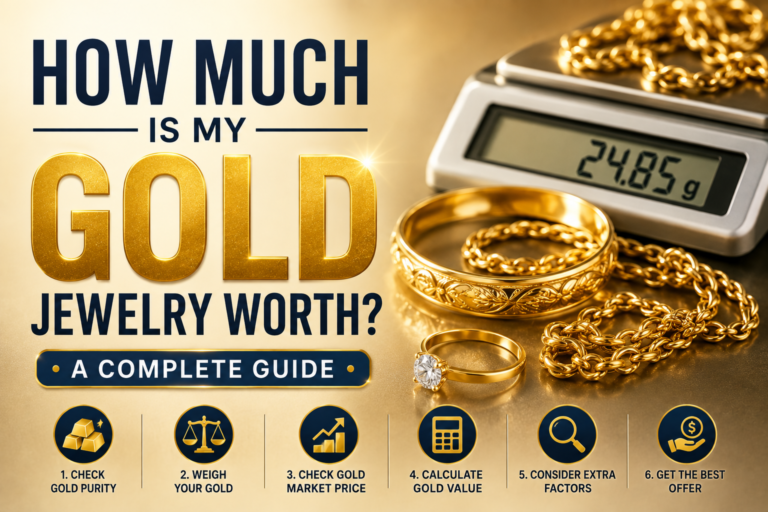
This is the intrinsic value of the pure gold in the piece. It is calculated by multiplying the item’s total weight by its purity factor and the current gold spot price. For example, a 10-gram 18K necklace contains 7.5 grams of pure gold. At $75 per gram spot price, the gold content value is $562.50. Use our gold value calculator for instant valuations.2. Making Charges
Making charges cover the labor and craftsmanship involved in creating the jewelry piece. These typically range from 5% to 25% of the gold value, depending on the complexity of the design. Simple chains and plain bands carry low making charges (5-8%). Intricate filigree work, hand-engraved pieces, and designer jewelry carry higher charges (15-25%). Making charges are negotiable at many jewelers, particularly in Asian gold markets.3. Brand Premium
Luxury brands like Cartier, Tiffany & Co., Bvlgari, and Van Cleef & Arpels command significant premiums above the gold value — sometimes 100-500% or more. This premium reflects brand prestige, design exclusivity, and resale value. Branded jewelry from top houses often retains value better than unbranded pieces, though the premium is not recoverable in melt value.Calculate Your Jewelry’s True Value
Use our free jewelry value calculator to see the melt value, brand premium, and estimated resale value of any gold jewelry piece.
Jewelry Value Calculator → Gold Value Calculator →How to Verify Gold Jewelry Authenticity
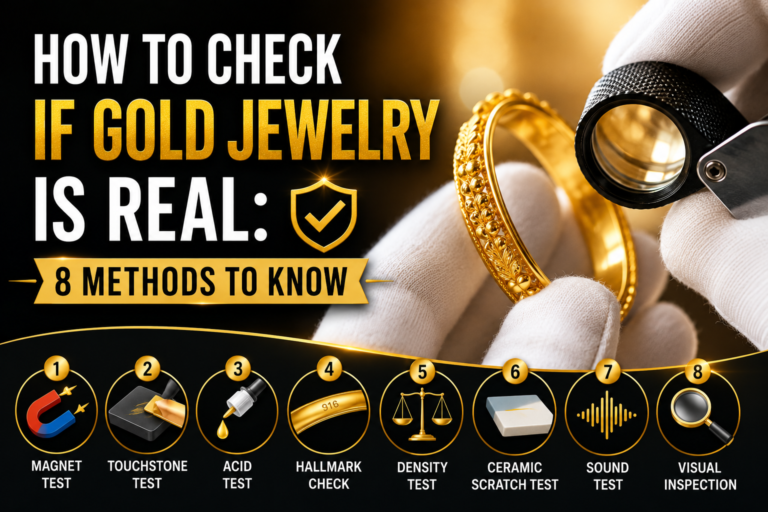
Counterfeit gold jewelry is a significant problem globally. Here is how to verify that the gold jewelry you are buying is genuine:1. Check the Hallmark
Every genuine gold jewelry piece should have a hallmark stamp indicating its purity. Look for numbers like 999 (24K), 916 (22K), 750 (18K), 585 (14K), or 417 (10K). The stamp is typically located on the inside of rings, on the clasp of chains, or on the back of pendants. Use our gold purity checker to decode any hallmark instantly. A missing or blurry hallmark is a red flag — though some antique or handmade pieces may lack stamps legitimately.2. Magnet Test
Gold is non-magnetic. If a magnet attracts your jewelry, it is either not gold or contains significant ferrous (iron-based) metals. This is a quick, non-destructive preliminary test, but it is not definitive — some counterfeit gold uses non-magnetic metals.3. Weight and Density
Gold is very dense (19.3 g/cm³). A gold chain should feel noticeably heavy for its size. If a piece feels lightweight, it may be hollow, gold-plated, or counterfeit. Compare the weight of similar-sized pieces to develop a sense of what genuine gold should feel like.4. Professional Testing
For high-value purchases, request XRF (X-Ray Fluorescence) testing from the jeweler. This non-destructive test provides an instant, accurate purity reading. Acid testing is another option but requires scratching the item. Reputable jewelers will test items in front of you upon request.Choosing Gold Jewelry by Purpose
| Purpose | Recommended Karat | Why |
|---|---|---|
| Engagement ring | 14K or 18K | Durable for decades of daily wear; 18K for prestige, 14K for maximum toughness |
| Wedding necklace (Indian) | 22K | Cultural standard; high gold value for family wealth |
| Everyday chain | 14K or 10K | Durable, affordable, minimal maintenance |
| Investment / savings | 24K bars or coins | Maximum gold content, lowest premiums, best resale |
| Gift for child/teen | 14K or 10K | Durable, affordable, low risk if lost |
| Luxury statement piece | 18K | Standard for Cartier, Tiffany, Bvlgari; prestige and warmth |
| White gold look | 14K or 18K | Lower karats hold rhodium plating longer |
Gold Jewelry Care and Maintenance
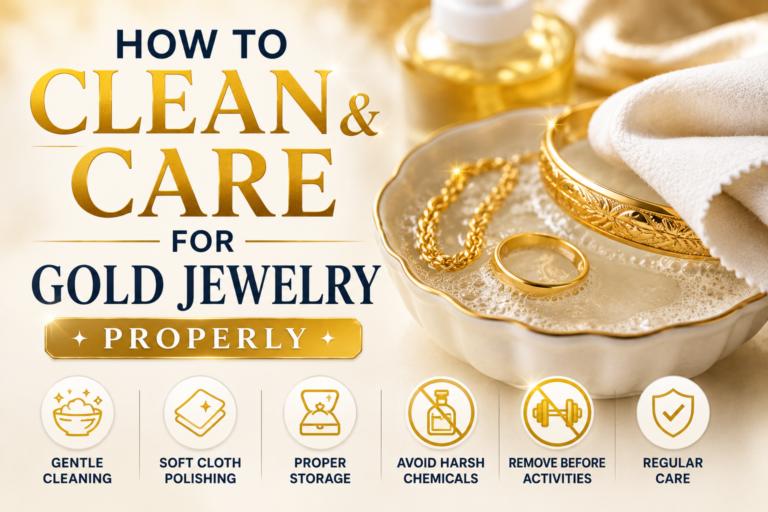
- Store separately: Gold is soft and scratches easily against other jewelry. Store each piece in a soft cloth pouch or separate compartment.
- Remove during activities: Take off gold jewelry when swimming (chlorine damages gold), exercising (sweat and friction), cleaning (chemicals), and showering (soap builds up).
- Clean gently: Soak in warm water with mild dish soap for 15-20 minutes. Use a soft-bristled brush (baby toothbrush) to gently clean crevices. Rinse thoroughly and pat dry with a microfiber cloth.
- Avoid ultrasonic cleaners for gemstone pieces: The vibrations can loosen settings and damage certain gemstones. Have gemstone jewelry professionally cleaned.
- Rhodium re-plating: White gold needs rhodium re-plating every 1-3 years to maintain its bright white finish. Most jewelers offer this service.
- Professional inspection: Have rings with gemstone settings inspected annually to ensure prongs remain secure.
Frequently Asked Questions About Gold Jewelry
What karat gold is best for an engagement ring?
14K or 18K gold are the best choices for engagement rings. 14K is the most durable option — it resists scratches and bending better than higher karats, making it ideal for a ring worn every day. 18K offers a richer gold color and higher prestige (it is the standard for luxury brands) while still being durable enough for daily wear. 24K and 22K are too soft for engagement rings and will deform with regular use.Is 10K gold real gold?
Yes. 10K gold is 41.7% pure gold — legally considered real gold in the United States. It is the minimum karat that can be sold as “gold” in the US. 10K is extremely durable and affordable, making it popular for budget jewelry and pieces that face heavy wear. However, it has a paler color and lower resale value than higher karat gold.Does gold jewelry tarnish?
Pure gold (24K) never tarnishes. Lower karat gold can develop a slight patina over many years because the alloy metals (particularly copper and silver) react with air and moisture. 14K and 10K gold may show slight darkening after decades of wear, especially in humid environments. This tarnish is surface-level and can be easily polished away by a jeweler.Why is Indian gold jewelry usually 22K?
Indian gold jewelry is traditionally 22K because gold serves dual purposes in Indian culture: adornment and financial security. 22K provides 91.6% pure gold content — high enough to serve as a genuine store of family wealth — while being hard enough for intricate jewelry craftsmanship. Indian families accumulate 22K gold over generations as both jewelry and inheritance. For more context, read our 24K vs 22K vs 18K comparison.Is white gold real gold?
Yes. White gold is genuine gold alloyed with white metals (palladium, nickel, silver) and plated with rhodium. 18K white gold contains 75% pure gold — identical gold content to 18K yellow gold. The difference is purely in the alloy metals and the rhodium plating. White gold requires periodic re-plating to maintain its bright white finish.How can I tell if gold jewelry is real?
Check for a clear hallmark stamp (999, 916, 750, 585, 417, or karat markings like 24K, 22K, 18K, 14K, 10K). Test with a magnet — gold is not magnetic. Genuine gold feels heavy for its size due to its high density. For definitive verification, request XRF testing from a jeweler or use an acid test kit. Use our gold purity checker to decode hallmarks.What is the difference between gold-plated and solid gold jewelry?
Solid gold jewelry is gold throughout its entire thickness — the purity is consistent from surface to core. Gold-plated jewelry has a microscopically thin layer of gold (typically 0.5-5 microns) electroplated onto a base metal like brass or copper. Gold-plated jewelry has negligible gold value, will wear through to the base metal over time, and cannot be sold as “gold.” Look for stamps like GP, GEP, HGP, or RGP — these indicate plating, not solid gold. Gold-filled (GF) jewelry has a thicker gold layer but is still not solid gold.Should I buy gold jewelry as an investment?
Gold jewelry is not an efficient pure investment because making charges (5-25%) are lost on resale. However, in many cultures — particularly India, Pakistan, and the Middle East — gold jewelry serves as both adornment and a form of savings. If investment is your primary goal, 24K gold bars and coins offer lower premiums and better liquidity. If you want jewelry that retains value, choose high-karat pieces (22K-24K) with low making charges. Use our jewelry value calculator to understand the investment value of any piece.
About the author