Yellow Gold vs White Gold vs Rose Gold: What’s the Difference?
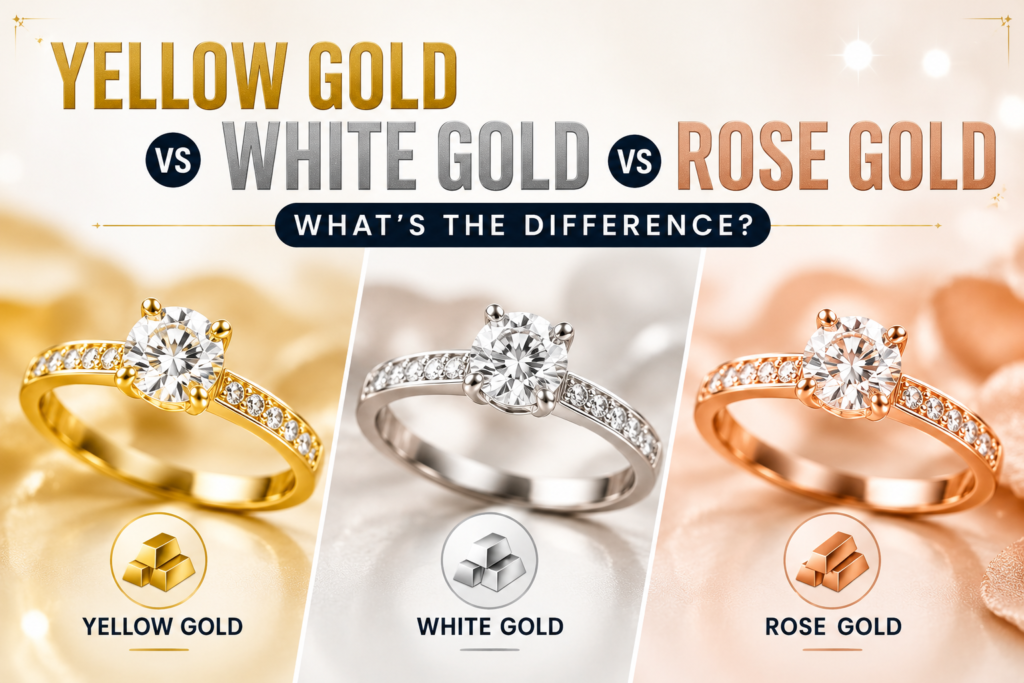
Gold jewelry comes in three primary colors — yellow gold, white gold, and rose gold — and each offers a distinct appearance, composition, durability profile, and maintenance requirement. The gold purity (karat) is identical across colors: 18K yellow gold, 18K white gold, and 18K rose gold all contain exactly 75% pure gold. The difference lies entirely in the alloy metals mixed with the gold and the surface treatments applied. Understanding these differences helps you choose the right gold color for your engagement ring, wedding band, necklace, or any jewelry purchase. This guide provides a complete comparison of yellow gold, white gold, and rose gold — covering appearance, composition, durability, maintenance, cost, skin tone compatibility, and popularity trends.Gold Colors: Quick Comparison
• Yellow Gold: Classic, traditional, hypoallergenic, no maintenance — the original gold color
• White Gold: Modern, sleek, makes diamonds look larger — requires rhodium re-plating every 1-3 years
• Rose Gold: Romantic, vintage, most durable — the copper alloy makes it scratch-resistant
• All three: Available in 14K and 18K; the gold purity (gold content) is identical across colors at the same karat
What Creates the Different Gold Colors?
Pure gold (24K) is always yellow. The different gold colors are created by mixing pure gold with specific alloy metals. The proportions and types of alloy metals determine the final color, while the karat number tells you how much pure gold is present regardless of color.| Gold Color | Primary Alloy Metals | Surface Treatment | Gold Purity (18K) |
|---|---|---|---|
| Yellow Gold | Silver + Copper + Zinc | None (color is through-and-through) | 75% pure gold |
| White Gold | Palladium or Nickel + Silver + Zinc | Rhodium plating (bright white finish) | 75% pure gold |
| Rose Gold | Copper (high proportion) + Silver | None (color is through-and-through) | 75% pure gold |
Yellow Gold: The Timeless Classic
Yellow gold is the original, traditional gold color — the color people picture when they think of “gold.” It has been used in jewelry for over 6,000 years and remains the most popular gold color globally, particularly in Asia, the Middle East, and for traditional jewelry designs.Appearance
Yellow gold has a warm, rich glow that varies with karat. 24K yellow gold is deep orange-yellow. 22K is bright yellow. 18K is warm yellow with a subtle richness. 14K is paler yellow with more noticeable silver tones. The higher the karat, the more intense and “golden” the yellow color appears.Durability
Yellow gold is moderately durable at 14K-18K. It is softer than rose gold of the same karat but harder than pure gold. 14K yellow gold is a good choice for daily-wear rings. 18K is the standard for fine jewelry and offers a good balance of color and durability. Yellow gold does not require any plating or surface treatment — the color is consistent throughout the metal, so scratches do not reveal a different color underneath.Maintenance
Yellow gold requires the least maintenance of the three gold colors. It never needs re-plating, and scratches can be easily polished out by a jeweler. Over decades, yellow gold may develop a slight patina that many people find attractive. Simple cleaning with mild soap and water keeps yellow gold looking beautiful.Skin Tone Compatibility
Yellow gold complements warm and olive skin tones particularly well. It can also look striking against darker skin tones. On very fair or cool-toned skin, yellow gold can sometimes appear brassy or overly warm — in these cases, white gold or rose gold may be more flattering.Popularity and Trends
Yellow gold is the most popular gold color globally, though its popularity in Western engagement rings has fluctuated. It was dominant until the 1990s, when white gold and platinum surged. Yellow gold has seen a strong resurgence since the late 2010s, driven by vintage-inspired designs and celebrity influence. It is the traditional choice for wedding bands and remains the standard in Asian, Middle Eastern, and Indian jewelry markets.White Gold: The Modern Classic
White gold was developed in the early 20th century as a more affordable alternative to platinum. It has a silvery-white appearance that complements diamonds exceptionally well, making it the most popular choice for engagement rings in Western markets since the 1990s.Appearance
White gold has a bright, silvery-white appearance thanks to its rhodium plating. The underlying gold alloy is actually a pale grey-yellow color — not truly white. Rhodium, a platinum-group metal, is electroplated onto the surface to create the bright, mirror-like white finish. This plating gives white gold its distinctive look but also creates its primary maintenance requirement.Durability
White gold is very durable, particularly when alloyed with palladium (the higher-quality, hypoallergenic option) rather than nickel. The rhodium plating adds an additional layer of scratch resistance. However, once the rhodium plating wears through (typically after 1-3 years of daily wear), the underlying yellowish metal becomes visible — particularly on the bottom of rings where friction is highest.Maintenance
White gold requires rhodium re-plating every 1-3 years to maintain its bright white appearance. This service typically costs $30-80 per item at a jeweler. Without re-plating, white gold will gradually show a yellowish tinge, especially in high-wear areas. For people with nickel allergies, request palladium-alloyed white gold — it is hypoallergenic and does not cause skin reactions.Skin Tone Compatibility
White gold complements cool and fair skin tones beautifully. It also looks excellent on all skin tones and is often chosen for its versatility — white gold matches everything and does not clash with other jewelry or clothing colors. This universality is one reason it became the dominant engagement ring metal.Popularity and Trends
White gold is the most popular choice for engagement rings in the United States, Canada, and Europe, though rose gold has been gaining ground since the mid-2010s. It remains the preferred metal for those who want a white-metal look without the higher cost of platinum. White gold is also popular for modern, minimalist, and Art Deco-inspired jewelry designs.Rose Gold: The Romantic Favorite
Rose gold has surged in popularity over the past decade, becoming a favorite for engagement rings, stacking rings, and contemporary jewelry designs. Its warm pink hue is created by alloying gold with a higher proportion of copper, giving it both its distinctive color and superior durability.Appearance
Rose gold ranges from soft blush pink to deep red-gold, depending on the copper content. 18K rose gold (75% gold, 22.25% copper, 2.75% silver) has a subtle, elegant pink tone. 14K rose gold (58.3% gold, higher copper proportion) has a stronger, more noticeable pink-red color because the copper percentage is higher relative to the gold. The more copper, the redder the appearance. Some jewelers offer “red gold” which contains even more copper for a deeper red hue.Durability
Rose gold is the most durable of the three gold colors. Copper is a hardening alloy — it makes the gold significantly more resistant to scratches and dents than yellow or white gold of the same karat. This durability, combined with its unique color, makes rose gold an excellent choice for engagement rings and everyday jewelry. Rose gold does not require plating, and its color is consistent throughout — scratches do not reveal a different color underneath.Maintenance
Rose gold requires minimal maintenance. It never needs re-plating, and scratches can be polished out like yellow gold. Over time, rose gold develops a subtle patina that many wearers find appealing — the copper in the alloy darkens slightly with age, giving the piece a warm, vintage character. This natural aging process is considered desirable rather than a flaw.Skin Tone Compatibility
Rose gold is the most universally flattering gold color. It complements warm, cool, and neutral skin tones equally well. The pink undertone adds warmth to fair skin, harmonizes with olive and tan skin, and creates a beautiful contrast against darker skin. If you are unsure which gold color suits you, rose gold is the safest and most versatile choice.Popularity and Trends
Rose gold experienced a massive surge in popularity starting around 2015, driven by Apple’s rose gold iPhone and broader fashion trends toward warm metals. It has become a staple for engagement rings, particularly in vintage-inspired and halo settings. Rose gold’s popularity shows no sign of fading — it has transitioned from a trend to a permanent option in fine jewelry. It is particularly popular among younger buyers and those seeking something distinctive from traditional yellow or white gold.Side-by-Side Comparison Table
| Feature | Yellow Gold | White Gold | Rose Gold |
|---|---|---|---|
| Color Source | Natural gold + silver/copper | Palladium/nickel alloy + rhodium plate | High copper content in alloy |
| Durability | Moderate | Good (with rhodium plating) | Excellent (hardest) |
| Hypoallergenic | Yes | With palladium alloy only | Yes |
| Maintenance | Minimal — polish as needed | Re-plating every 1-3 years | Minimal — polish as needed |
| Color Consistency | Through-and-through | Surface plating only | Through-and-through |
| Best Skin Tones | Warm, olive, dark | Cool, fair, all tones | All skin tones |
| Impact on Diamonds | Can add warmth to stone | Makes diamonds look larger/whiter | Complements warm-toned diamonds |
| Price (same karat) | Similar | Similar (slightly higher) | Similar |
Which Gold Color Should You Choose?
Choose Yellow Gold If:
- You want the classic, traditional gold look
- You prefer low-maintenance jewelry — no re-plating ever needed
- You have warm or olive skin tones
- You are buying traditional Asian or Middle Eastern jewelry (22K yellow gold is the cultural standard)
- You want your jewelry to look recognizably and unmistakably gold
- You have metal allergies — yellow gold is naturally hypoallergenic
Choose White Gold If:
- You want a modern, sleek, contemporary look
- You are buying a diamond engagement ring and want the diamond to appear as white and brilliant as possible
- You have cool or fair skin tones
- You primarily wear silver or white metal jewelry and want your gold to match
- You like the look of platinum but want a lower price point
- You are comfortable with periodic maintenance (rhodium re-plating every 1-3 years)
Choose Rose Gold If:
- You want a unique, romantic, vintage-inspired look
- You want the most durable gold — rose gold is the hardest of the three
- You have any skin tone — rose gold is universally flattering
- You prefer low-maintenance jewelry — no re-plating needed
- You want something distinctive that stands out from traditional yellow or white gold
- You like the idea of your jewelry developing a warm patina over time
Calculate Your Gold Jewelry’s Value
Use our free jewelry value calculator to see the melt value of your yellow, white, or rose gold jewelry at today’s live gold price.
Jewelry Value Calculator → Gold Value Calculator →Can You Mix Gold Colors?
Yes, mixing gold colors is perfectly acceptable — and increasingly popular. Multi-tone gold jewelry combines two or three gold colors in a single piece, creating visual interest and versatility. A ring might feature a yellow gold band with a white gold setting for the diamond, or a bracelet might alternate yellow, white, and rose gold links. Mixing gold colors in your overall jewelry collection is also common. Many people wear a yellow gold necklace with a white gold watch and a rose gold ring. The old rule about “matching your metals” is outdated — contemporary style embraces mixing gold colors. The key is to wear your mixed metals with confidence rather than trying to make everything match perfectly.Frequently Asked Questions About Gold Colors
Does white gold contain less gold than yellow gold?
No. At the same karat, white gold and yellow gold contain identical amounts of pure gold. 18K white gold is 75% pure gold — exactly the same as 18K yellow gold. The difference is only in the 25% alloy metals: yellow gold uses silver and copper, while white gold uses palladium or nickel. The gold content and intrinsic value are identical.Why does white gold turn yellow over time?
White gold turns yellow because the rhodium plating wears off, revealing the natural pale grey-yellow color of the underlying gold alloy. Rhodium is a hard metal, but daily friction — especially on rings — gradually wears it away. The rate of wear depends on body chemistry, activities, and how often the piece is worn. Re-plating restores the bright white finish.Is rose gold more expensive than yellow gold?
At the same karat, rose gold and yellow gold are similarly priced. Copper (the primary alloy in rose gold) is less expensive than silver or palladium, so rose gold can sometimes be marginally less expensive. However, the difference is negligible for most jewelry purchases. The gold content — which determines the bulk of the price — is identical.Can I be allergic to white gold?
Yes, if the white gold is alloyed with nickel. Nickel allergies are common and can cause skin irritation, redness, and itching. If you have a nickel allergy, request palladium-alloyed white gold, which is hypoallergenic. Yellow gold and rose gold do not contain nickel and are safe for people with metal allergies. The rhodium plating on white gold also provides a barrier — but once it wears through, the underlying nickel can contact the skin.Does rose gold fade or change color over time?
Rose gold does not fade, but it may darken slightly over many years as the copper in the alloy develops a natural patina. This darkening is subtle, even, and considered desirable by many — it gives rose gold a warm, vintage character. The color change is permanent and cannot be polished away without removing metal. Unlike white gold, rose gold’s color is through-and-through, so it never needs re-plating.Which gold color is best for an engagement ring?
There is no single “best” color — it depends on personal preference. White gold is the most popular for engagement rings because it makes diamonds appear larger and whiter. Rose gold is the most durable and offers a unique, romantic look. Yellow gold is the most traditional and requires the least maintenance. All three are excellent choices when made in 14K or 18K for daily wear durability.Can I change my white gold jewelry to yellow or rose gold?
No, the color of gold is determined by the alloy mixture and cannot be changed without melting and re-alloying the metal. You can have white gold re-plated with rhodium to maintain its white finish, or you can have yellow gold plated with rhodium to give it a white appearance (temporarily). But the underlying alloy color is permanent. If you want a different gold color, you need to purchase a new piece or have the gold melted and re-cast — which is rarely cost-effective for finished jewelry.
About the author