Buying Gold in India: 22K vs 24K, Tola, Making Charges, and GST
India is the world’s largest consumer market for gold jewellery, and its pricing has its own vocabulary: 22K and 24K, tola and gram, making charges, and GST on top of metal value. A buyer who does not separate those layers will overpay without knowing where the money went — or, just as often, will accuse a fair jeweller of overcharging because a calculator result and a shop bill are measuring different things. This guide separates the layers.
22K vs 24K: the jewellery standard versus the investment standard
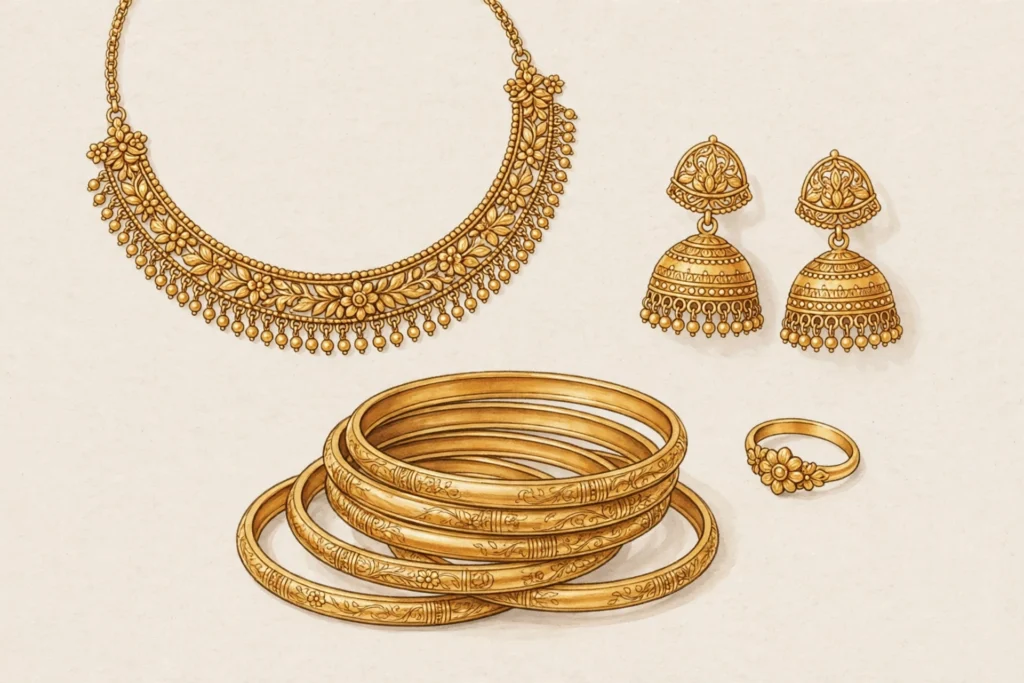
In India, 22K (916 fineness) is the standard for jewellery. It is strong enough to wear daily and to hold intricate designs, and it is what most Indian jewellers stock. 24K (999 fineness) is softer and is used mainly for coins, bars, and investment gold, not for everyday jewellery — a 24K bangle would bend and scratch far more easily than a 22K one.
EXAMPLE ONLY — not today’s price, using $100 per gram for 24K gold (and, for this example only, ignoring currency conversion — an Indian shop price will be in rupees, converted from the USD spot price at the prevailing rate, so a real calculation must state its exchange rate as well). A 10-gram 22K item: 10 × 0.916 × $100 = $916 metal value. A 10-gram 24K item: $999. The difference is fineness alone, before making charges or tax.
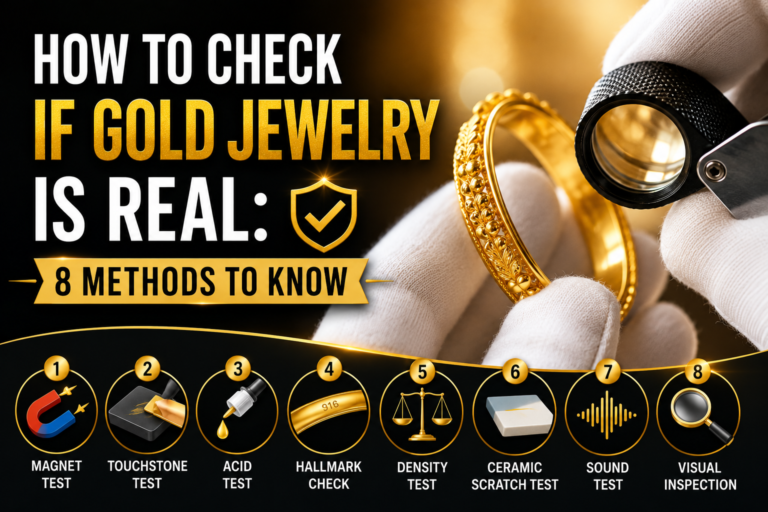
BIS hallmarking in India certifies fineness and is the check to look for on jewellery: a BIS mark with the fineness (22K/916 or as applicable) and the jeweller’s identification. A hallmark is a claim that can be verified through the BIS system — it is not, by itself, a guarantee of weight, and weight should still be stated separately on the bill.
Tola and gram: convert before you compare
A tola is 11.6638 grams. Many Indian buyers still think in tolas, while bills and calculators increasingly use grams. Convert first: a 2-tola 22K bangle weighs 23.3276 grams, and its metal value in the example above is 23.3276 × 0.916 × $100 = $2,136.81. If a shop quotes per tola and a calculator quotes per gram, convert one to the other before comparing — a tola quote that looks low can be high per gram, and vice versa, especially once karat is factored in.
Making charges: the layer buyers argue about most
Making charges pay for the labour, design, and overhead of turning metal into jewellery. They are usually quoted as a percentage of metal value or as a flat rate per gram, and they vary enormously: simple machine-made chains carry low making charges, intricate handmade designs carry high ones. Making charges are largely unrecoverable on resale for melt — a buyer paying for gold content will not pay for the making that went into a piece they intend to melt.
That is the key judgement for an Indian jewellery buyer: how much making charge is worth paying for a design you will wear and enjoy, knowing that charge will not come back when you sell? There is no universal right answer, but there is a wrong way to judge it: by comparing a shop bill (metal + making + GST) with a calculator result (metal only) and calling the difference “overcharging”. Compare metal with metal, then judge making on its own merits, and compare making charges across jewellers for similar designs.
GST and the bill: what should be itemised
GST in India applies to gold jewellery: GST on the value of gold, and GST on making charges, at the rates in force at the time of purchase. Rates and rules can change, so this guide does not state a rate as a permanent fact — check the rate in force and, more importantly, check that your bill itemises it. A proper Indian jewellery bill should state: weight in grams, fineness/karat, metal value or rate basis, making charges, GST (separately, or with its basis stated), and total. If any of those lines is missing, ask for it before paying. An itemised bill is also your evidence for resale, insurance, and any later dispute about weight or purity.
Gold rate today in India: why a single figure misleads
Searches for “gold rate today in India” are among the closest to page 1 for this site, but a single national figure hides real variation: 22K and 24K rates differ, city rates differ slightly by local association and transport, and a shop rate includes the layers above while a spot-based rate does not. When you see a rate quoted, ask: for what karat, in what city, per gram or per tola, including or excluding making charges and GST, and at what time? A rate without those qualifiers is a headline, not a price you can transact at.
Use the existing India price page for its rate basis and date, and use this guide — not another price table — to understand what that rate does and does not include. Then run your own metal value with the Karat Converter and the Gold Value Calculator, stating your exchange rate and price basis, before comparing with a shop bill.
Frequently asked questions
Should I buy 22K or 24K gold in India? For jewellery to wear, 22K is the practical standard. For investment bars or coins, 24K is the standard. Buying 24K jewellery for daily wear is usually a mistake — it is too soft — and buying 22K bars for investment means paying jewellery-style making and handling for metal you do not need shaped.
Are making charges negotiable? Often, yes, especially for simpler designs and larger purchases — but negotiation should be on the making-charge line, not by disputing the metal value, which is set by weight, fineness, and rate.
What should I check on an Indian gold bill? Weight in grams, fineness, metal value or rate basis, making charges, GST itemisation, and total — plus BIS hallmark details for jewellery. Keep the bill; it is your resale and insurance evidence.
Is gold a good investment in India? That depends on period, costs, tax, and your overall portfolio, not on a single day’s rate. This guide explains pricing; it does not give personal investment advice.
Estimates only. A calculator result is metal value, not a dealer payout or a retail price. This article is general information, not personal financial advice. Tax rates and rules can change; confirm current GST treatment with a qualified professional before a material purchase.
Related guide

About the author