How Much Is a Gold Ring, Chain, or Bracelet Worth?
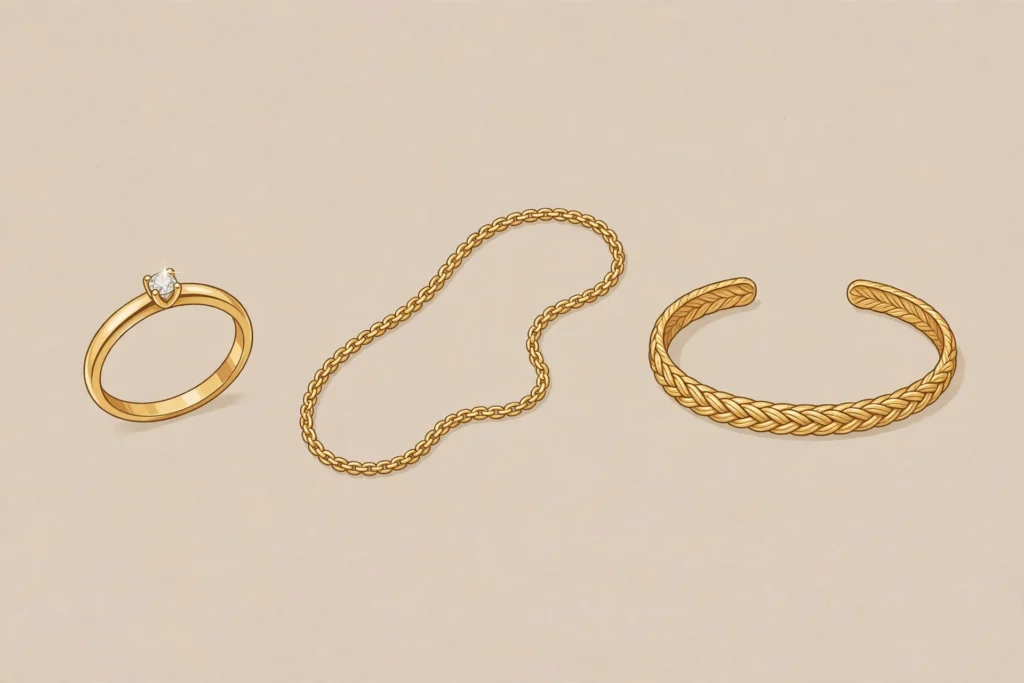
A ring, a chain, and a bracelet can weigh the same and still be worth different amounts as metal, because karat, stones, and non-gold parts differ. This guide works through one example of each, using the same transparent formula, so you can see exactly where the number comes from — and why a shop price and a scrap offer for the same piece are both “correct” in different senses.
The formula, every time
Metal value = Weight in grams × Purity factor (karat ÷ 24) × Price per gram.
EXAMPLE ONLY — not today’s price. In every example below, 24K gold is $100 per gram, so 18K is $75.00 per gram, 14K is $58.33 per gram, and 10K is $41.67 per gram. Change the price and the answers change proportionally; the method does not.
Example 1: A gold ring
A plain 18K wedding band weighs 6 grams and has no stone. Metal value: 6 × 0.75 × $100 = $450. If the same band were 14K, it would be 6 × 0.5833 × $100 = $350. That $100 difference is purely purity — same weight, same design, different gold content.
Now add a stone. Suppose a ring weighs 8 grams in total, but the stone and setting account for 1.5 grams of non-gold weight, leaving 6.5 grams of 18K metal. Metal value: 6.5 × 0.75 × $100 = $487.50, not the $600 you would get by valuing the full 8 grams as gold. This is the most common overestimate in ring valuations, and it is why “weigh it with the stone in” should always be flagged.
Example 2: A gold chain
Chains are where weight surprises people. A hollow chain looks substantial but weighs little; a solid curb chain of the same length weighs much more. Suppose a solid 14K chain weighs 20 grams. Metal value: 20 × 0.5833 × $100 = $1,166.67 in the example. A hollow chain of the same style weighing 8 grams in 14K is $466.67. Length alone tells you nothing; weight and karat tell you almost everything about metal value.
Chains also have clasps and springs that may be a different karat or a base metal. If a clasp is stamped differently from the chain, weigh and value it separately, or note it as unknown rather than assuming the whole chain is one purity.
Example 3: A gold bracelet
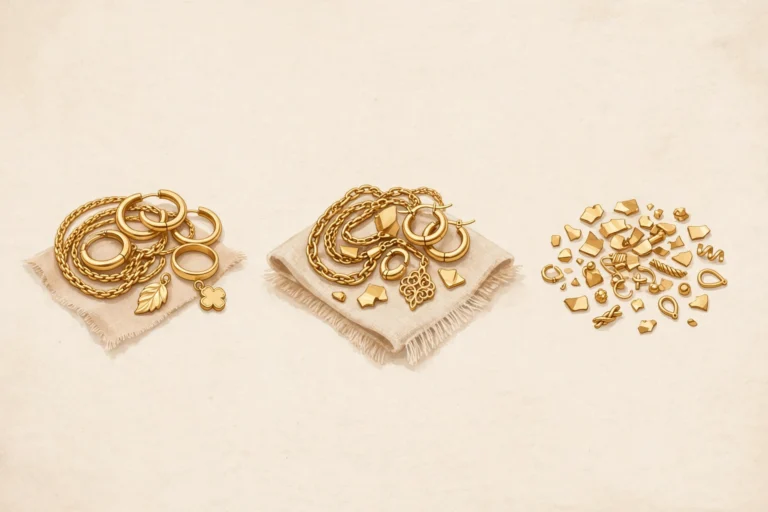
Suppose a 22K bangle weighs 15 grams with no stones. 22K is 22 ÷ 24 = 0.9167, so metal value is 15 × 0.9167 × $100 = $1,375 in the example. A charm bracelet is different: charms, links, and a clasp may be mixed karats, and some charms may be hollow. Weigh the bracelet as a whole for a rough figure, then, if you are selling, separate any charms with different marks and value them as their own pile. A single average karat for a mixed bracelet is a guess, not a measurement.
Metal value is not the selling price
In all three examples, a dealer payout will be below metal value. Using the selling-fees guide’s typical ranges as a frame (not a promise): a refiner might pay 90–95% of melt for a large clean lot, a local buyer 75–85%, a pawn shop 60–75%. Apply those ranges to the metal value you calculated, and you get a realistic band to compare quotes against — not a single “correct” offer. If an offer falls far outside the band for that buyer type, ask for the itemised deductions.
Retail is the opposite direction. A new ring’s shop price includes the metal, plus making, design, brand, distribution, and tax. That is why a ring you bought for $1,200 can have a metal value of $450. Neither figure is wrong; they measure different things. Confusing them is how sellers feel cheated and buyers feel accused, when both are looking at different definitions of “worth”.
How to use the calculator well
Enter metal weight, not total weight, when you know the difference. Enter the karat you actually read, not the karat you wish the piece were. Run the piece once at the stamped karat and once at the next karat down if you are unsure — that range is more honest than a single precise-looking number built on an uncertain input. Save or note the price basis and date you used, because a result without a price basis cannot be checked later.
Frequently asked questions
Is a heavier chain always worth more? As metal, yes, if karat is the same — but only metal weight counts, and hollow pieces weigh less than they look.
Does a designer brand increase scrap value? No. A scrap buyer pays for gold content. Brand value belongs in a resale market, not a melt calculation.
What if my bracelet has mixed karats? Value each karat group separately. A blended average will overpay the low-karat parts and underpay the high-karat parts in the same total.
Should I clean gold before valuing it? Cleaning does not change gold content, but do not use abrasive methods that remove metal. Weighing is what matters, not polishing.
Estimates only. A calculator result is metal value, not a dealer payout or a retail price. This article is general information, not personal financial advice.
Related guides and calculators
How to Value Gold Jewellery at Home

About the author