Gold vs Silver: Which Is the Better Investment?
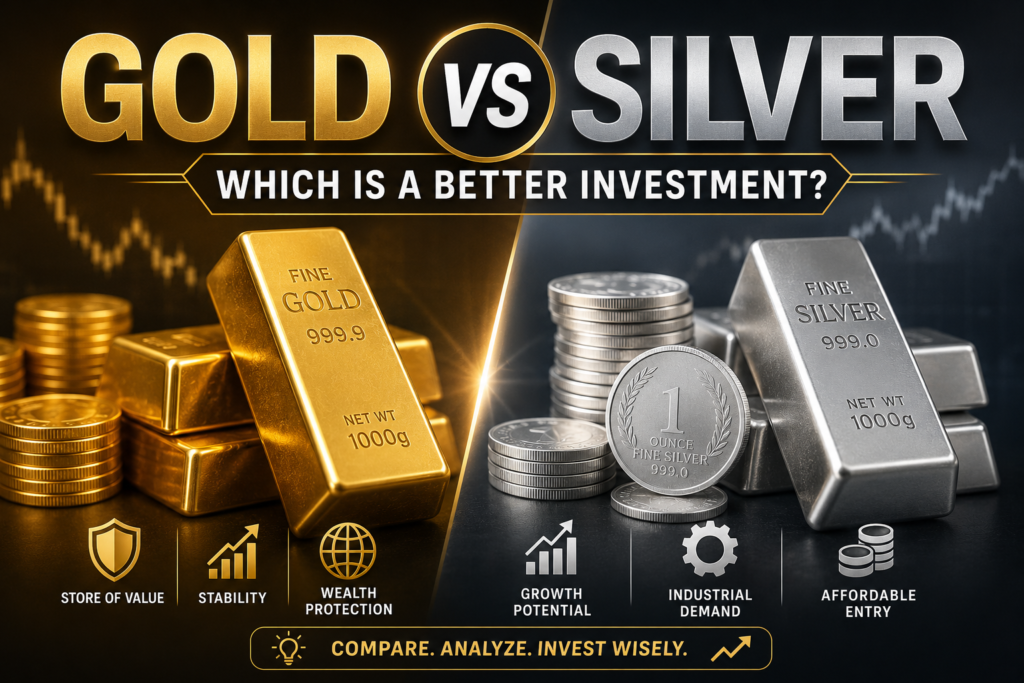
Gold and silver are the world’s two most important precious metals, but they serve very different roles in an investment portfolio. Gold is primarily a monetary metal and store of value. Silver is both a monetary metal and an industrial commodity. This fundamental difference drives their price behaviour, volatility, storage requirements, and suitability for different investors. This guide provides a comprehensive, side-by-side comparison of gold and silver as investments. We examine price history, volatility, industrial demand, storage considerations, the gold-silver ratio, and practical guidance on which metal — or what combination — belongs in your portfolio.Gold vs Silver: Quick Comparison • Gold — Store of value, central bank reserve, low volatility, compact storage, higher price per ounce • Silver — Industrial + monetary metal, higher volatility, bulkier storage, lower price per ounce, higher upside potential • Both — Inflation hedges, tangible assets, no counterparty risk, historically preserve purchasing power
Price History: Gold vs Silver Performance
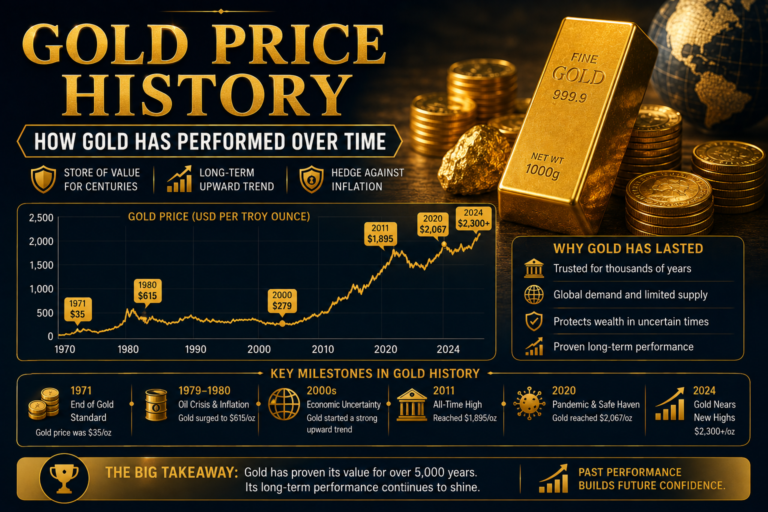
Both gold and silver have delivered exceptional long-term returns, but their paths have been very different. Understanding this history helps set realistic expectations for future performance.| Period | Gold Return | Silver Return | Winner |
|---|---|---|---|
| 2000–2010 | +422% | +566% | Silver |
| 2010–2020 | +32.8% | +7.5% | Gold |
| 2020 (COVID Year) | +25% | +48% | Silver |
| 20-Year (2004–2024) | +474% | +290% | Gold |
Volatility: Why Silver Swings Harder
Silver is significantly more volatile than gold. This is the single most important difference for investors to understand. Silver can rise faster than gold during bull markets — but it can also fall much further during corrections. The reasons for silver’s higher volatility are structural. The silver market is much smaller than the gold market — the total annual silver supply is worth approximately $20-25 billion, compared to over $200 billion for gold. This smaller market size means that the same dollar amount of investment flows moves silver prices much more dramatically than gold prices. A $1 billion inflow to gold ETFs is a rounding error in the gold market. A $1 billion inflow to silver can move prices by 5-10%. Silver is also more concentrated in terms of supply. Over 70% of silver production comes as a by-product of copper, lead, and zinc mining. This means silver supply does not respond quickly to silver prices — mines cannot increase silver production without also increasing base metal production. This supply inelasticity amplifies price movements in both directions.⚠️ Silver Volatility Warning: Silver has experienced multiple drawdowns of 50% or more. From its 2011 peak of ~$49 to its 2015 low of ~$14, silver lost 72% of its value. Gold’s worst drawdown in the same period was 44%. Silver investors must have higher risk tolerance than gold investors.
The Gold-Silver Ratio: A Key Valuation Tool
The gold-silver ratio is one of the oldest and most widely followed metrics in precious metals investing. It simply measures how many ounces of silver it takes to buy one ounce of gold. For example, if gold is $2,000 per ounce and silver is $25 per ounce, the ratio is 80 (2,000 ÷ 25 = 80). Historically, the gold-silver ratio has ranged from approximately 15 (Roman Empire) to over 120 (2020 COVID crash). In the modern era (since 1971), the ratio has averaged around 60. When the ratio is high (above 80), silver is considered undervalued relative to gold. When the ratio is low (below 50), silver is considered relatively expensive.| Gold-Silver Ratio | What It Suggests | Historical Context |
|---|---|---|
| Above 80 | Silver potentially undervalued | 2020 COVID crash (120), 2008 crisis (84) |
| 60–80 | Modern average range | Most of 1990–2024 |
| Below 50 | Silver potentially overvalued | 2011 peak (32), 1980 peak (17) |
Industrial Demand: Silver’s Double-Edged Sword
Approximately 50-60% of silver demand comes from industrial applications — electronics, solar panels, medical devices, photography, and batteries. This industrial demand gives silver an additional demand driver that gold lacks, but it also ties silver’s fortunes more closely to the economic cycle.Silver’s Major Industrial Uses
- Electronics: Silver’s superior electrical conductivity makes it essential in switches, contacts, and circuit boards. Every smartphone, computer, and electric vehicle contains silver.
- Solar Energy: Photovoltaic solar panels use approximately 20 grams of silver each. The global solar energy boom has become a significant and growing source of silver demand — roughly 10-12% of annual supply.
- Medical: Silver’s antibacterial properties make it valuable in wound dressings, medical devices, and water purification systems.
- Photography: While declining, photographic silver demand still accounts for 3-4% of annual supply.
Storage & Portability: The Practical Difference
The physical difference between gold and silver creates very practical investment implications. Gold is dramatically more compact per dollar of value. This makes gold much easier and cheaper to store, transport, and secure than silver.Storage Comparison — $50,000 Investment: • Gold: Approximately 25 troy ounces — fits in a small jewelry box, weighs ~1.7 lbs (780g) • Silver: Approximately 2,000 troy ounces — requires a large safe or multiple safe deposit boxes, weighs ~137 lbs (62kg) • Annual storage cost for gold: $150-500 (small safe deposit box or home safe) • Annual storage cost for silver: $500-2,000+ (large safe deposit box, professional vault, or substantial home safe)
For investors with limited storage space or who may need to transport their metals, gold’s compactness is a significant advantage. A $100,000 gold position can fit in a jacket pocket. A $100,000 silver position requires a hand truck. This portability advantage becomes critically important during emergencies or when crossing borders.
Central Bank and Institutional Demand
Central banks hold gold — they do not hold silver. This is one of the most important structural differences between the two metals. Central banks globally hold over 35,000 tonnes of gold as a reserve asset. They have been net buyers of gold every year since 2010. This institutional demand provides a consistent price floor for gold that silver lacks. Gold also benefits from significant ETF demand, sovereign wealth fund allocations, and recognition as a Tier 1 bank asset under Basel III regulations. Silver, while also held in ETFs, does not have the same level of institutional endorsement. This makes gold the more “defensive” precious metal — it has a built-in bid from the world’s most powerful financial institutions.Which Should You Choose? A Practical Guide
The “gold vs silver” decision is not binary. Many precious metals investors hold both metals in proportions that match their goals. Here is a practical framework for deciding:| Your Profile | Recommended Allocation | Rationale |
|---|---|---|
| Conservative wealth preservation | 80-100% gold | Lower volatility, compact storage, central bank backing |
| Balanced precious metals exposure | 60-70% gold, 30-40% silver | Gold anchors portfolio, silver adds upside |
| Aggressive, higher risk tolerance | 40-60% gold, 40-60% silver | Silver’s higher beta amplifies returns in bull markets |
| Small budget (under $5,000) | 50-70% silver, 30-50% gold | Silver is more accessible; can accumulate meaningful weight |
| Portability / emergency preparedness | 90-100% gold | Gold is far more portable per dollar of value |
Frequently Asked Questions About Gold vs Silver
Is silver a better investment than gold?
Silver is not inherently better or worse — it serves a different purpose. Silver has higher upside potential during precious metals bull markets due to its smaller market size and industrial demand. Gold offers greater stability and is the preferred safe-haven asset for central banks and institutional investors. Many experienced investors hold both, with gold as the core holding and silver as a higher-risk complement.Why is silver so much cheaper than gold?
Silver is more abundant in the Earth’s crust — approximately 15-20 times more common than gold. Annual silver mine production is roughly 8 times larger than gold production. Silver’s lower price also reflects its dual role as an industrial metal, which ties its value to economic cycles rather than purely to monetary demand.What is the gold-silver ratio telling us now?
The gold-silver ratio fluctuates daily. When it is above 80, silver is historically undervalued relative to gold, suggesting potential for silver outperformance. When below 50, silver is relatively expensive. Track the current ratio and compare it to historical averages when making allocation decisions.Does silver tarnish? Does that affect its value?
Yes, silver tarnishes over time due to reaction with sulfur compounds in the air. This tarnish (silver sulfide) is a surface layer that can be easily removed with polishing. Tarnish does not affect the silver content or melt value of bullion bars and coins. Unlike gold, which never tarnishes, silver requires occasional cleaning if appearance matters to you.Can I invest in both gold and silver?
Absolutely. Most precious metals investors hold both metals. A common approach is a 70/30 or 60/40 split in favour of gold, using gold as the stable core holding and silver for additional upside exposure. Both metals can be held in physical form, ETFs, and digital platforms. Diversification across metals reduces single-metal risk.Which is better for a small budget?
Silver is more accessible for small budgets. With $100, you can buy approximately 4 ounces of silver — a meaningful amount. The same $100 buys only about 0.05 ounces of gold — a tiny fraction. However, silver’s bulkiness becomes a consideration as holdings grow. Many investors start with silver and transition to gold as their budget increases.How do gold and silver perform during a recession?
Gold tends to perform more reliably during recessions because its demand is driven by safe-haven buying and monetary policy responses. Silver’s performance is mixed — its industrial demand falls during recessions, which can offset safe-haven buying. During the 2008 financial crisis, gold fell less and recovered faster than silver. During the 2020 COVID recession, silver outperformed due to unprecedented stimulus and a rapid industrial recovery.
About the author