What Is Gold? Understanding the Precious Metal
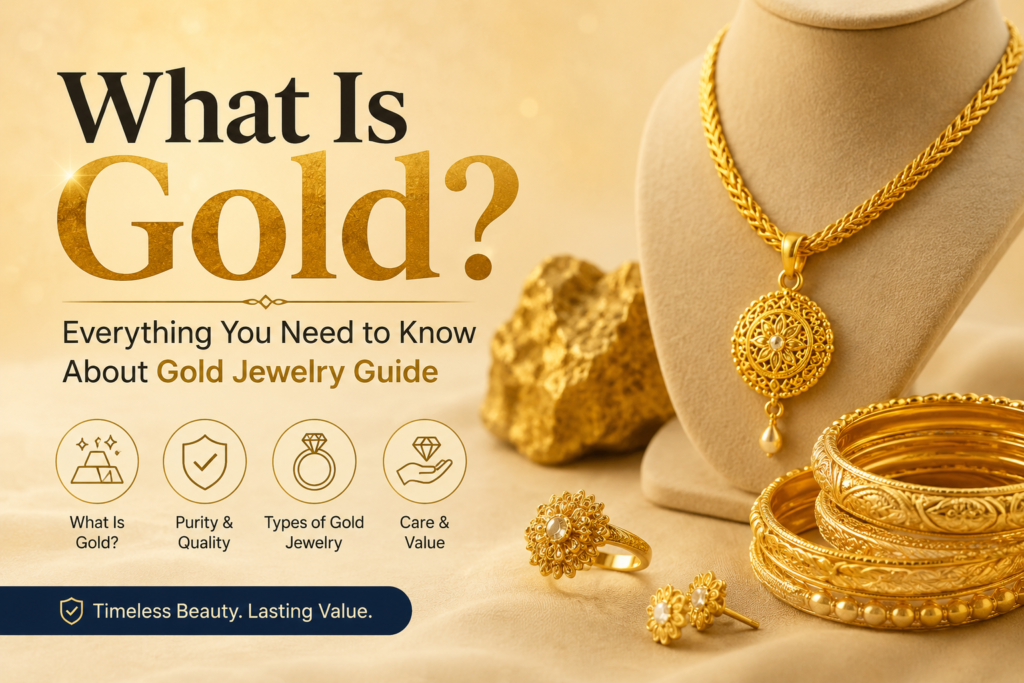
Gold is a dense, soft, malleable precious metal with the chemical symbol Au (from the Latin aurum). It is one of the least reactive chemical elements, which means it does not tarnish, rust, or corrode — making it uniquely suited for jewelry, currency, and long-term storage of wealth. Gold has captivated human civilization for over 6,000 years. Ancient Egyptians used gold in burial masks and religious artifacts. The Lydians minted the first gold coins around 550 BCE. Every major civilization has valued gold — not because someone declared it valuable, but because its physical properties make it inherently suited as a store of value.Key Facts About Gold: • Chemical symbol: Au | Atomic number: 79 • Density: 19.3 g/cm³ — one of the densest metals • All the gold ever mined would fit into a 23-meter cube • Gold is virtually indestructible — nearly all gold ever mined still exists • 1 gram of pure gold can be beaten into a sheet of 1 square meter
Unlike paper currency, which can be printed at will, gold cannot be created artificially. Its supply grows slowly through mining — roughly 3,000 tonnes per year — making it a reliable hedge against inflation and currency devaluation. This is why central banks, including the US Federal Reserve and the Reserve Bank of India, hold significant gold reserves.
Gold Purity Guide: Understanding Karats & Fineness
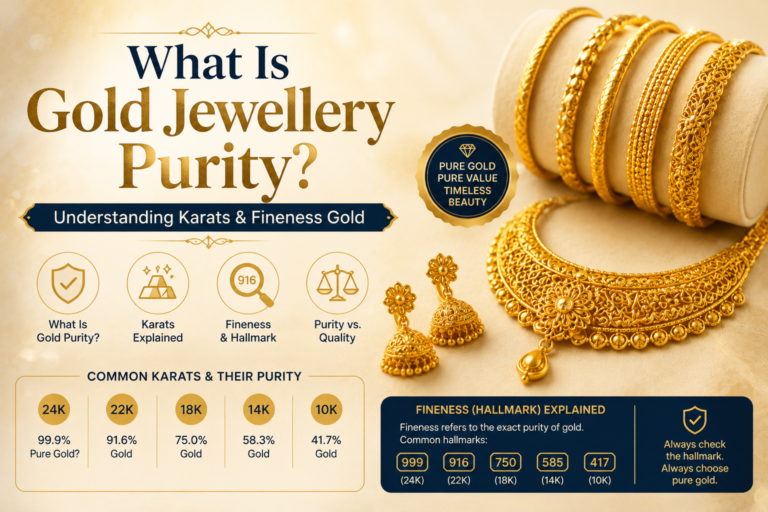
Gold purity measures how much pure gold is present in an item compared to other metals. Because pure gold (24K) is too soft for practical use in jewelry, it is mixed with metals like silver, copper, zinc, and palladium to create durable alloys. The purity of these alloys is measured using two systems: karats and millesimal fineness.The Karat System
The karat system divides gold purity into 24 parts. 24 karat (24K) is pure gold — 24 out of 24 parts gold. 18 karat (18K) is 18 parts gold and 6 parts other metals, making it 75% pure. This system is used primarily in the United States, United Kingdom, Middle East, and India.The Millesimal Fineness System
The millesimal system expresses purity in parts per thousand. 999 means 999 parts per thousand pure gold (99.9% pure, equivalent to 24K). 750 means 75% pure gold (18K). 585 is 58.5% pure (14K). This system is standard across Europe and increasingly used worldwide for hallmarking.| Karat | Millesimal | Purity % | Parts/24 | Common Use |
|---|---|---|---|---|
| 24K | 999 / 999.9 | 99.9% | 24/24 | Bullion, investment bars |
| 22K | 916 | 91.6% | 22/24 | Indian jewelry, Krugerrands |
| 18K | 750 | 75.0% | 18/24 | Luxury jewelry |
| 14K | 585 | 58.5% | 14/24 | US engagement rings |
| 10K | 417 | 41.7% | 10/24 | Budget jewelry |
24K vs 22K Gold: Key Differences Explained
One of the most common questions in gold buying is: should I buy 24K or 22K gold? The answer depends on your purpose — investment or jewelry.24K Gold (99.9% Pure)
24K gold is the purest form of commercially available gold. It has a rich, bright yellow-orange colour that is unmistakable. However, pure gold is very soft — it can be scratched with a fingernail and bent easily. This makes it unsuitable for everyday jewelry like rings or bracelets that experience regular wear. Best for: Investment bars, bullion coins, gold savings, and special-occasion jewelry in cultures where 24K ornaments are traditional (India, China, Middle East). 24K gold commands the highest resale value because it contains the most gold.22K Gold (91.6% Pure)
22K gold contains 22 parts gold and 2 parts other metals — typically silver, copper, or zinc. This small alloy addition makes it noticeably harder than 24K while retaining the rich gold colour. 22K is the standard for Indian jewelry and is also used in the South African Krugerrand gold coin. Best for: Traditional jewelry, wedding ornaments, and gold coins. 22K offers an excellent balance of purity and durability. It is more resistant to scratching than 24K but maintains high intrinsic gold value.Calculate Your Gold’s Value
Use our free gold value calculator to see exactly what your 24K, 22K, 18K, or 14K gold is worth at today’s live prices.
Gold Value Calculator → Check Purity →Why Is Gold Valuable? The Economics of Gold
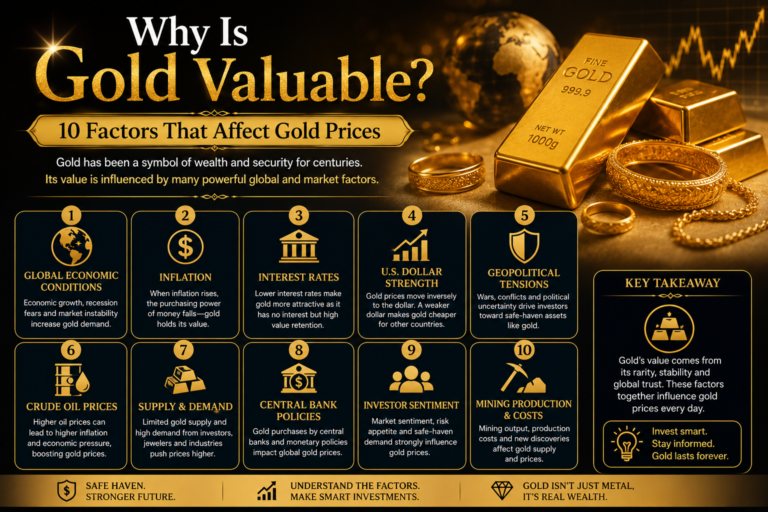
Gold’s value is not arbitrary — it stems from a unique combination of physical properties, historical precedent, and economic fundamentals. Understanding why gold has value helps you make informed investment decisions.Six Reasons Gold Holds Value
- Scarcity: All the gold ever mined fits into a 23-meter cube. Annual mine production adds only ~1.7% to existing supply. New gold discoveries are increasingly rare and expensive to develop.
- Durability: Gold does not corrode, tarnish, or degrade. Gold artifacts from ancient Egypt remain in pristine condition after 5,000 years. This permanence makes it a reliable store of wealth across generations.
- Universal Acceptance: Gold is recognized and valued in every country on Earth. There is no currency risk, no counterparty risk, and no border restrictions on its value. A gold coin in Mumbai is as valuable as one in New York.
- No Counterparty Risk: Unlike stocks, bonds, or bank deposits, physical gold is not dependent on any institution’s promise. It is a tangible asset you can hold, store, and pass down without relying on a third party.
- Inflation Hedge: When paper currencies lose purchasing power through inflation, gold historically maintains or increases its value. During the high-inflation 1970s, gold rose from $35 to $850 per ounce.
- Central Bank Demand: The world’s central banks hold over 35,000 tonnes of gold. Countries like China, India, and Poland have been net buyers, reducing reliance on US dollar reserves.
Uses of Gold: Jewelry, Investment, Coins & Bars
Gold’s applications span millennia and industries. While jewelry dominates demand, gold’s role in investment, technology, and central banking is equally important.Gold Jewelry
Approximately 45-50% of annual gold demand comes from jewelry manufacturing. India and China together account for over 50% of global gold jewelry consumption. Gold jewelry ranges from 9K (37.5% pure) to 24K (99.9% pure), with 14K and 18K being most common in Western markets and 22K preferred in Asia and the Middle East.Gold Coins & Bars
Gold coins like the American Gold Eagle, Canadian Gold Maple Leaf, South African Krugerrand, and British Gold Britannia are popular investment vehicles. They are minted by sovereign governments, guaranteeing weight and purity. Gold bars range from 1 gram to 400-ounce London Good Delivery bars used by central banks.Gold as Investment
Investors access gold through physical bullion, gold ETFs (exchange-traded funds), gold mining stocks, futures contracts, and digital gold platforms. Gold is widely regarded as a portfolio diversifier and safe-haven asset during economic uncertainty. Use our gold investment calculator to project potential returns.Industrial & Technology Uses
Gold’s excellent conductivity and corrosion resistance make it essential in electronics — smartphones, computers, and spacecraft all contain small amounts of gold. It is also used in dentistry, medical devices, and as a coating on satellite components. Approximately 8% of annual gold demand comes from technology applications.Gold Price Today: How Gold Is Priced
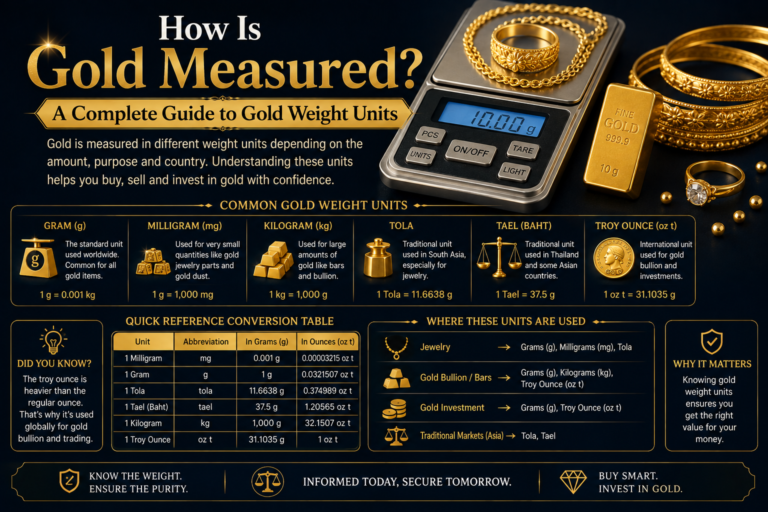
Gold prices are determined by global markets, primarily through trading on the COMEX (New York) and the LBMA (London) gold fixing. The gold price you see quoted is the spot price — the wholesale price for one troy ounce of pure gold for immediate delivery. Key factors influencing gold prices include: US Federal Reserve interest rate decisions, US dollar strength, inflation data, geopolitical tensions, central bank buying, and jewelry demand from India and China. Gold is priced in US dollars globally, then converted to local currencies.Gold Price Quick Reference: • Gold is priced per troy ounce (31.1035 grams) — not regular ounces • The spot price changes 24 hours a day during trading weeks • Retail prices include a dealer premium (typically 2-8% above spot) • Check live gold prices for your country: Gold Price Today →
How to Buy Gold: A Beginner’s Guide
Buying gold for the first time can feel daunting. Here is a straightforward guide to purchasing gold safely and intelligently.- Decide Your Purpose: Are you buying for investment, jewelry, or a gift? Investment gold should be high-purity (24K bars or coins) with low premiums.
- Choose Physical or Digital: Physical gold gives direct ownership but requires secure storage. Gold ETFs and digital platforms offer convenience but involve counterparty risk.
- Verify Purity: Check for hallmarks and stamps indicating karat or millesimal fineness. Use our gold purity checker to decode hallmarks.
- Compare Prices: Get quotes from multiple dealers. Compare the premium over spot price.
- Buy from Reputable Sources: Government mints, authorized bullion dealers, major banks, and established online platforms.
- Secure Storage: Home safes, bank safe deposit boxes, or professional vault storage. Insurance recommended for significant holdings.
Understanding Gold Hallmarks & Stamps
Gold hallmarks are official stamps applied to gold items that certify their purity. Understanding these marks is essential for verifying authenticity and avoiding counterfeit gold.| Country | Common Marks | System |
|---|---|---|
| United States | 10K, 14K, 18K, 24K | Karat system |
| United Kingdom | 375, 585, 750, 916, 999 | Millesimal + assay |
| European Union | 585, 750, 999 + CCM | Millesimal |
| India | 22K, 916, BIS logo | BIS hallmarking |
| China | 999, 9999, 24K | Millesimal |
Warning Signs of Fake Gold
- Blurry or uneven stamping — genuine hallmarks are crisp and precise
- Missing maker’s marks on high-value items
- Gold-plated items stamped as solid gold (look for GP, GEP, GF, RGP stamps)
- Prices significantly below market value
- Discolouration or wearing through to a different metal underneath
- Magnetic attraction — gold is not magnetic
Frequently Asked Questions About Gold
What is gold and why is it valuable?
Gold is a precious metal (chemical symbol Au) valued for its rarity, durability, and universal acceptance. It does not corrode, cannot be created artificially, and has served as a store of value for over 6,000 years. Its value is supported by scarcity, global demand for jewelry and investment, and central bank reserves.What is the difference between 24K and 22K gold?
24K gold is 99.9% pure — the purest form available commercially. 22K gold is 91.6% pure with 8.4% other metals added for durability. 24K is too soft for daily-wear jewelry and is preferred for investment. 22K is the standard for Indian jewelry and Krugerrand coins, offering high purity with better durability.How is gold purity measured?
Gold purity is measured using two systems: karats (K) and millesimal fineness. Karats divide purity into 24 parts (24K = pure). Millesimal fineness expresses purity in parts per thousand (999 = 99.9% pure = 24K). Common markings include 24K, 22K, 18K, 14K, 10K, 999, 916, 750, 585, and 417.What is a troy ounce of gold?
A troy ounce is the standard unit for weighing precious metals, equal to 31.1035 grams. It is different from a regular (avoirdupois) ounce which is 28.3495 grams. Gold prices are always quoted per troy ounce in international markets.What gives gold its value?
Gold’s value comes from its scarcity (limited supply), durability (never corrodes), universal acceptance (valued globally), historical precedent (6,000+ years as money and adornment), and economic role as an inflation hedge and safe-haven asset.How can I check if my gold is real?
Check for clear hallmarks or stamps indicating karat purity. Use a magnet (gold is not magnetic). Look for discolouration or wearing through to base metal. Professional testing methods include acid tests, electronic gold testers, and XRF analysis.How is gold priced in different countries?
Gold is priced globally in US dollars per troy ounce on international markets (COMEX, LBMA). Local gold prices are calculated by converting the USD price to the local currency at current exchange rates, then adding any applicable taxes, import duties, and dealer premiums.What is the best type of gold to buy for investment?
For pure investment, 24K gold bars (1 oz, 100g, 1kg) and sovereign bullion coins (American Eagles, Krugerrands, Maple Leafs) offer the lowest premiums and highest liquidity. Avoid gold jewelry for investment due to making charges (5-25%) which are lost on resale.Explore Our Free Gold Tools
Calculate gold values, check purity, convert karats, and track live gold prices. All tools are free and private — no sign-up required.
Gold Value Calculator Gold Purity Checker Gold Price Today
About the author